



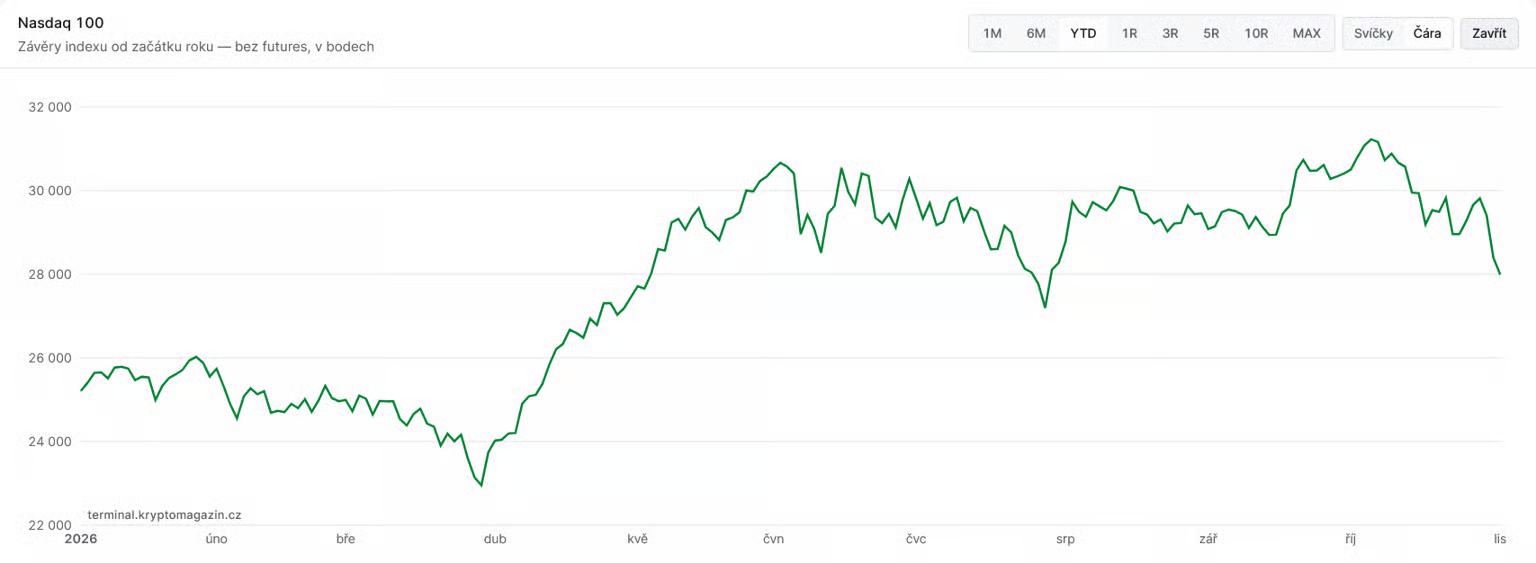
Monday’s trading session got off to a promising start for the Nasdaq 100, with the technology-heavy index climbing more than 1% in early trading. However, the optimism quickly evaporated as a sharp reversal took hold. The index plunged more than 750 points from its intraday high before closing 1.39% lower at 27,989 points. The sell-off officially pushed the market into correction territory.
The latest closing level represents a decline of more than 10% from the all-time high recorded on October 6. The index has now fallen to its lowest closing level since late July.
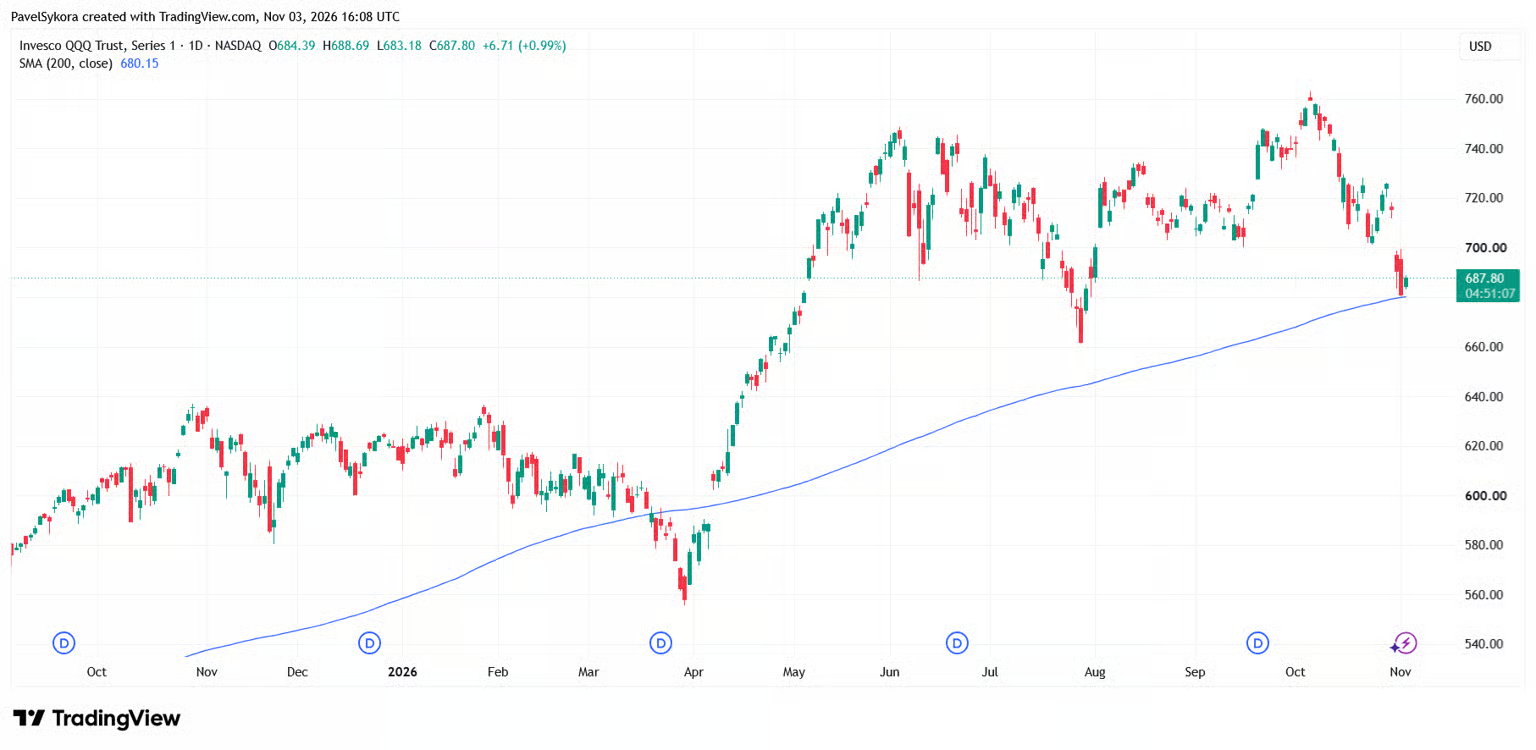
The weakness has also spread to investment products tracking the technology sector. The popular Invesco QQQ ETF, for example, dropped to $681. It is now hovering dangerously close to its 200-day moving average, currently sitting at $679.
AI Stock Sell-Off: AMD, Intel and Oracle Under Heavy Pressure
The primary driver behind the latest market downturn has been a sharp rotation of capital away from semiconductor and artificial intelligence stocks.
One of the biggest disappointments came from Marvell Technology, whose shares plunged 13%. The decline followed the announcement of a controversial $115 billion acquisition of an optical components manufacturer. The deal will also be financed entirely through a stock-for-stock transaction.
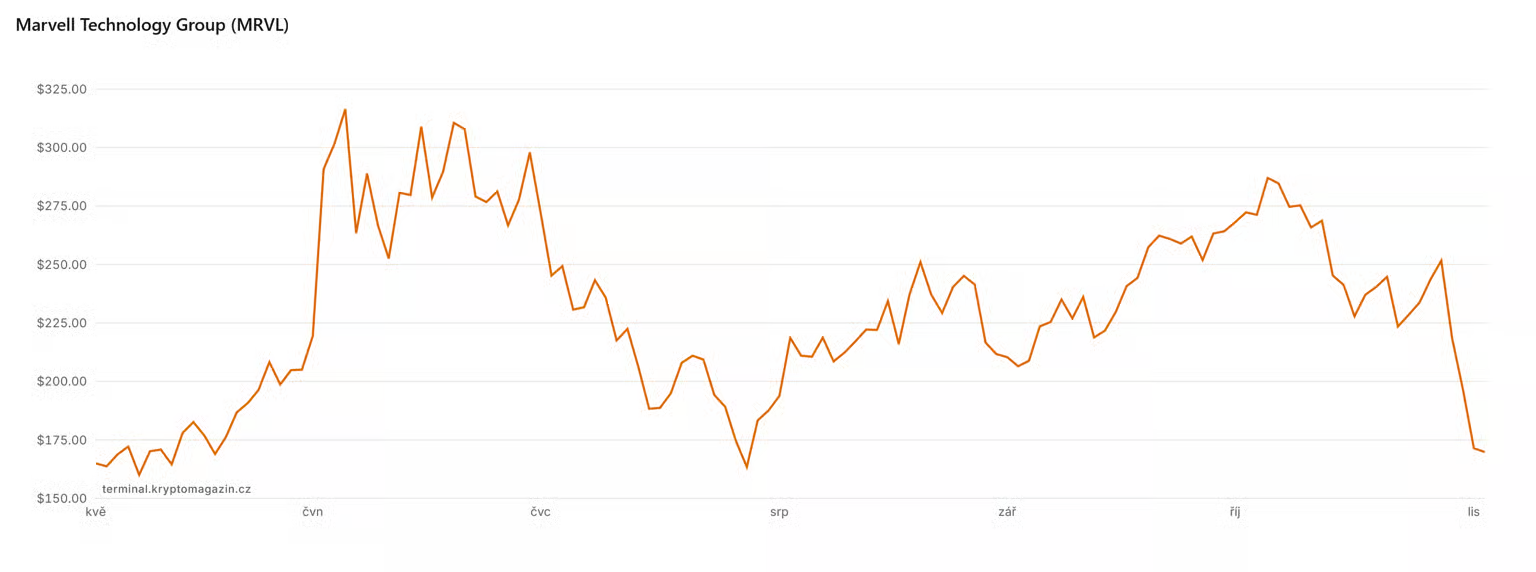
The broader hardware infrastructure sector is facing significant selling pressure. Investors are increasingly realizing that building data centers takes time and does not necessarily translate into immediate profits.
Many semiconductor companies had been priced for near-perfect execution. However, meeting such lofty expectations in the real business environment is proving increasingly difficult, triggering aggressive sell-offs.
Other technology giants also struggled. Oracle shares dropped nearly 9% following an unexpected announcement of plans to raise $20 billion through debt and equity offerings.
Intel’s downward spiral continued, with the stock losing another 8.8% following its previous steep decline. Shares of Advanced Micro Devices (AMD) also came under pressure, falling 7.5%.
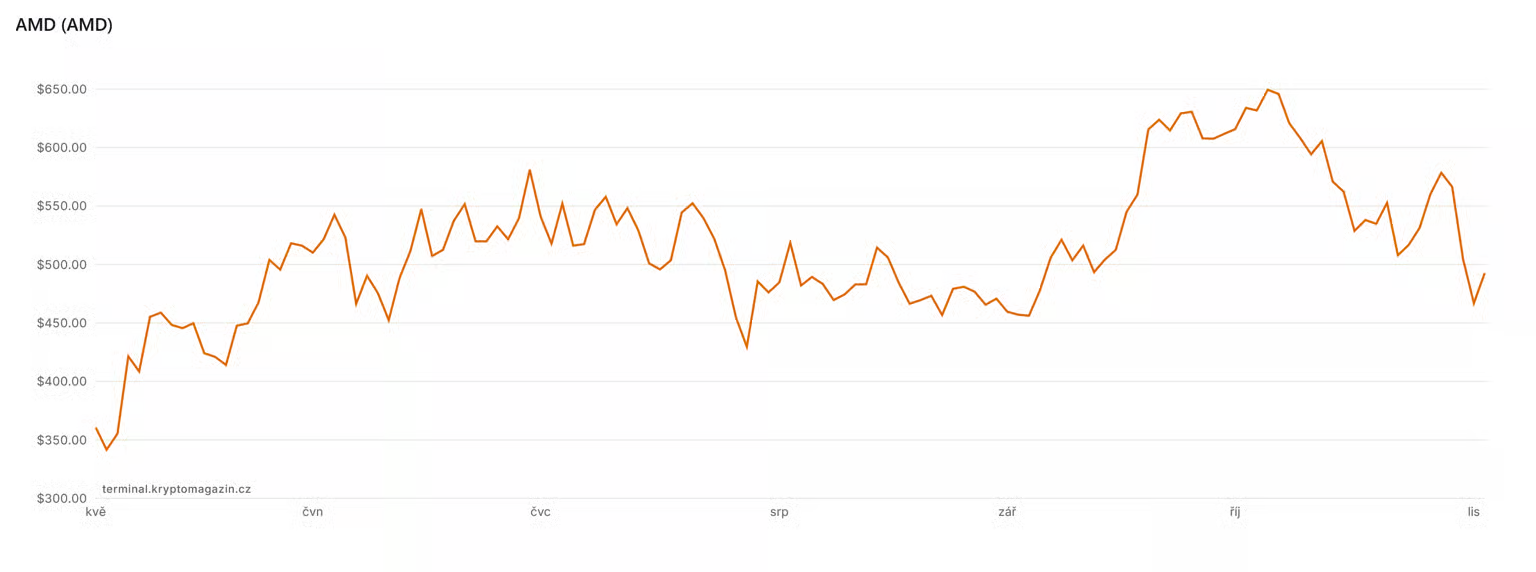
The pressure on chipmakers has spread throughout the technology sector. The closely watched Philadelphia Semiconductor Index (SOX) fell 3.4%, reaching its lowest level since late April. The index has now lost a staggering 29.4% from its June peak.
However, the broader market picture is not quite as bleak as these figures might suggest.
Capital Rotation: Who Is Benefiting From the Sell-Off?
While technology stocks are experiencing a dramatic decline, the broader market is not showing signs of widespread panic.
Seven of the 11 sectors in the S&P 500 managed to post gains despite the weakness in technology shares.
Rather than moving entirely into cash, investors are simply reallocating capital to other parts of the market. This pattern suggests a relatively healthy sector rotation. A genuine market panic would typically involve aggressive selling across nearly all asset classes and sectors.
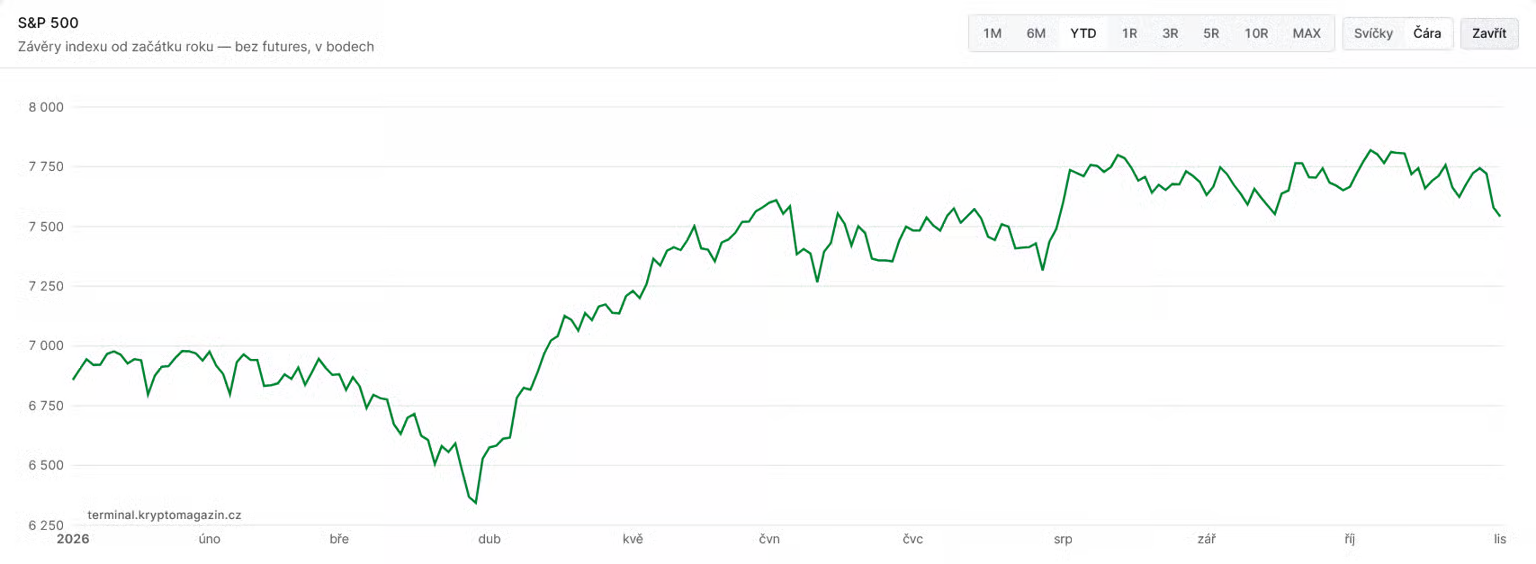
Cyclical stocks, financial institutions and consumer-related sectors are among the main beneficiaries of the capital flowing out of technology companies.
This trend is particularly evident in the performance of the S&P 500. While the traditional market-cap-weighted index declined by approximately 0.5%, its equal-weighted counterpart actually gained 0.73%.
In other words, the negative performance of the largest companies is masking the underlying strength of smaller constituents.
Personally, I consider the current test of the 200-day moving average in the Invesco QQQ ETF an absolutely critical technical support level.
If the ETF loses this level on the weekly chart in the coming days, I believe it could open the door to substantially deeper declines toward the next major support zones.
Capital rotation has also been supported by surprising developments in commodity markets.
West Texas Intermediate (WTI) crude oil plunged 7.3% to $96.51 per barrel. The decline was driven by renewed hopes of successful peace negotiations between the United States and Iran.
Lower energy prices could help ease global inflation, potentially creating a more favorable environment for monetary policy.
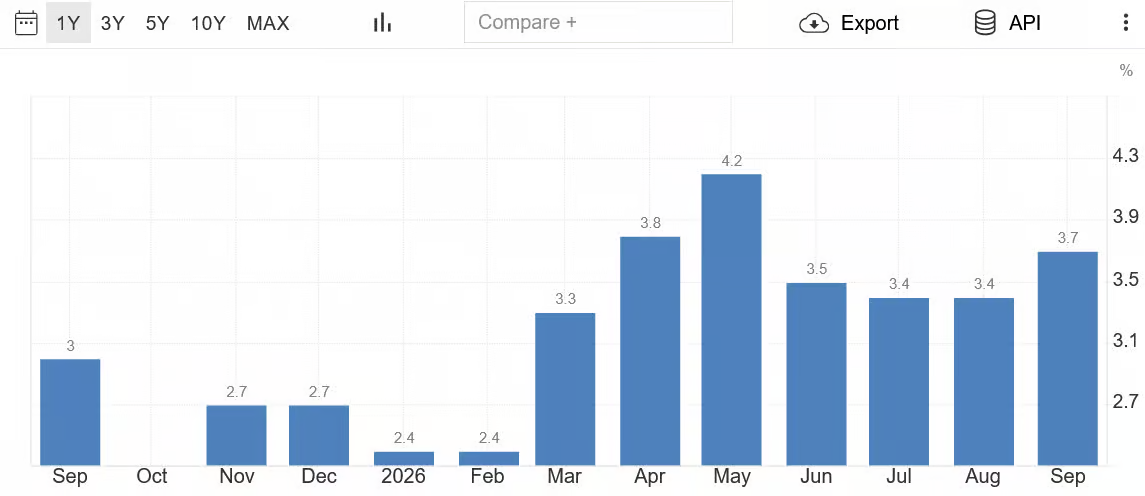
Falling oil prices are therefore sending mixed signals to financial markets.
On the one hand, cheaper energy helps contain inflationary pressures, potentially giving central banks more room to lower interest rates.
On the other hand, declining energy stocks are weighing on broader equity indices. Oil prices therefore remain an important indicator for the overall direction of stock markets.
What to Watch in November and How Investors Should Respond
History shows that the previous corrections in March and July ultimately led to new all-time highs. Whether the market will follow a similar pattern this time remains to be seen.
Despite the recent sell-off, the Nasdaq 100 is still up approximately 11% year to date. However, previous rebounds offer no guarantee that the same scenario will unfold again.
Markets are now approaching a series of potentially decisive events.
The next major catalyst will be earnings from AMD, scheduled for release after the US market closes today, immediately following the American elections.
A day later, investors will digest the US Treasury Department’s quarterly refunding announcement. The week will then culminate with Friday’s closely watched US employment report.
Each of these events has the potential to trigger substantial market volatility.
For short-term traders, these fluctuations may create opportunities for potentially rapid profits. Long-term investors, however, should remain calm and avoid making emotional decisions.
Financial markets have a tendency to overreact in both directions, and the current wave of selling could ultimately prove to be little more than short-term noise.
For investors holding the Nasdaq 100, the biggest risk remains the index’s heavy concentration in a relatively small number of technology giants.
When these companies decline simultaneously, they can drag the entire index lower.
Simply put, the Nasdaq 100 does not offer the same degree of diversification as the S&P 500, given its much stronger concentration in technology and technology-related companies.
