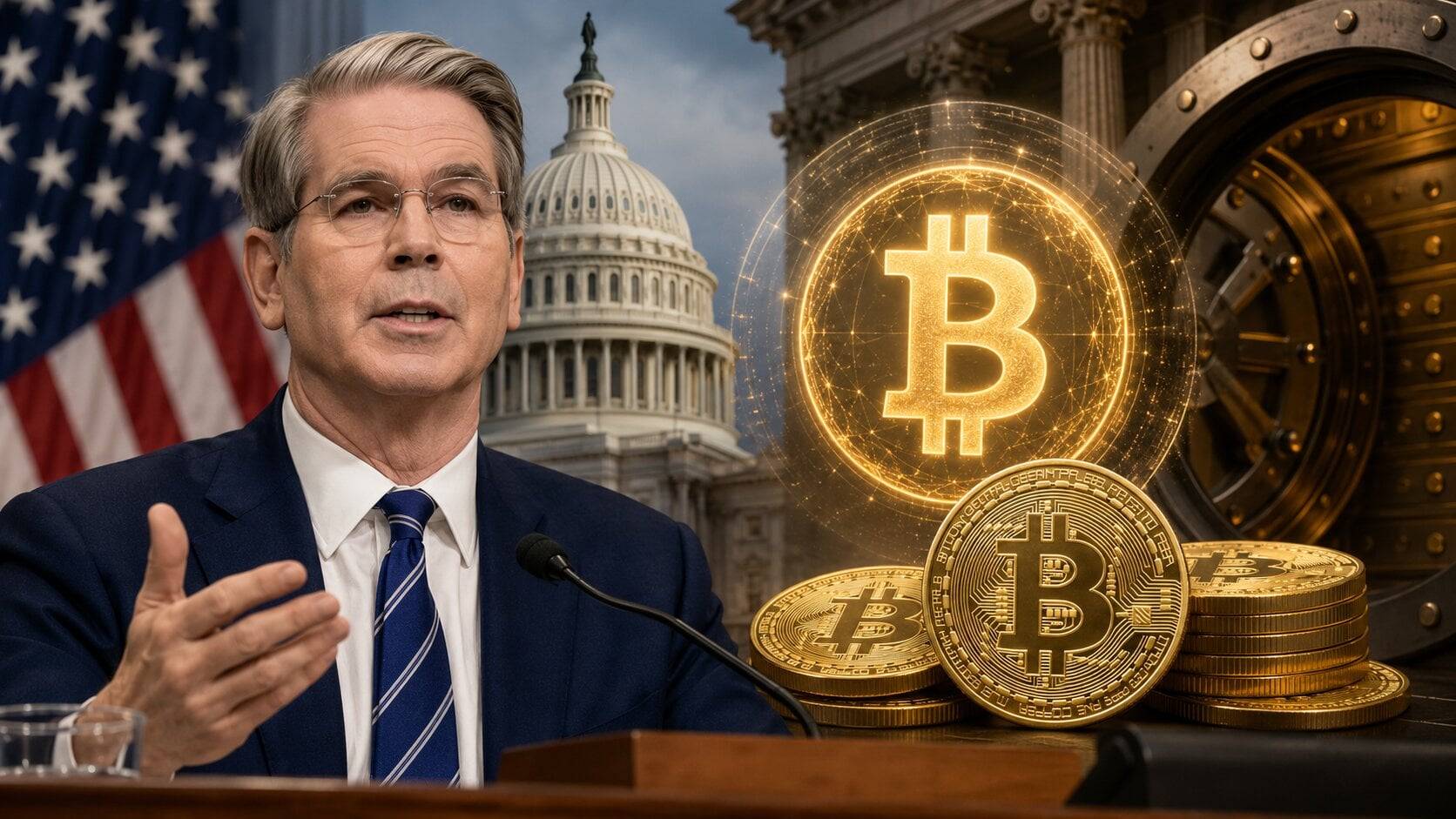
The Past Week on Markets: Information Silence and the $40 Trillion Debt Scare
Markets are struggling with a lack of new data, shifting focus to long-term risks like the $40 trillion debt scare. Discover why the 'buy the dip' strategy persists despite changing Fed rate expectations and rising geopolitical tensions involving Iran.
The past week on stock markets showed that it is far harder for markets to endure information silence than an excess of events and statistics.
In recent months, markets have exerted great creative effort in interpreting all macroeconomic and corporate news. The order was clear. Everything is to be interpreted in a way that suggests the Fed does not need to raise rates.
We have shifted significantly in expectations since the beginning of the year. Just as a reminder: at the start of the year, the expectation was when the Fed would cut rates and how many times it would happen this year.
Now, the most optimistic scenario is precisely that the Fed will keep rates stable until the end of the year. In other words, its restrictive monetary policy will continue.
Markets managed to turn every piece of news to their advantage
Markets have always managed to twist news appropriately. Sometimes they rose because good news is always good news. For example, the latest inflation figures sounded good, even though they were still well above the two-percent inflation target.
And sometimes they applied the logic that bad news is good news for markets, such as the figures from the US labor market.
Lower job creation is bad news, but markets understood it as very good news. It raised the possibility that the US central bank has an excuse not to tighten monetary policy further.
Precisely this waiting for various current news is a good catalyst. Markets don't have to follow all long-term economic problems but focus on one thing. One which, as recent experience shows, we know cannot end badly.
And that, by the way, is also the reason why the buy the dip strategy has worked very well for the last two years. Markets are not yet set for a prolonged bear market trend; so far, it has always been a path upward with small breaks.
However, this week an information wasteland awaited us.
Iran did not capture market attention this time
This didn't even change with Donald Trump and his bizarre proposals for solving the crisis in Iran. First, he declared that at the end of the conflict, the Strait of Hormuz would be annexed to US territory. He subsequently accompanied this idea a few hours later with an image. To this, the Iranian side responded in kind, declaring with hyperbole that they would annex California after the conflict ends.
The situation has not been developing well for the US in the long term, so Trump is looking for fault in others. He threatened Oman that if it doesn't behave, he might attack it.
This is a bit strange because Oman is more of an ally on the geopolitical map. However, thanks to a large Shia group, it mediates dialogue with Iran. In any case, threatening foreign partners is not a good long-term solution.
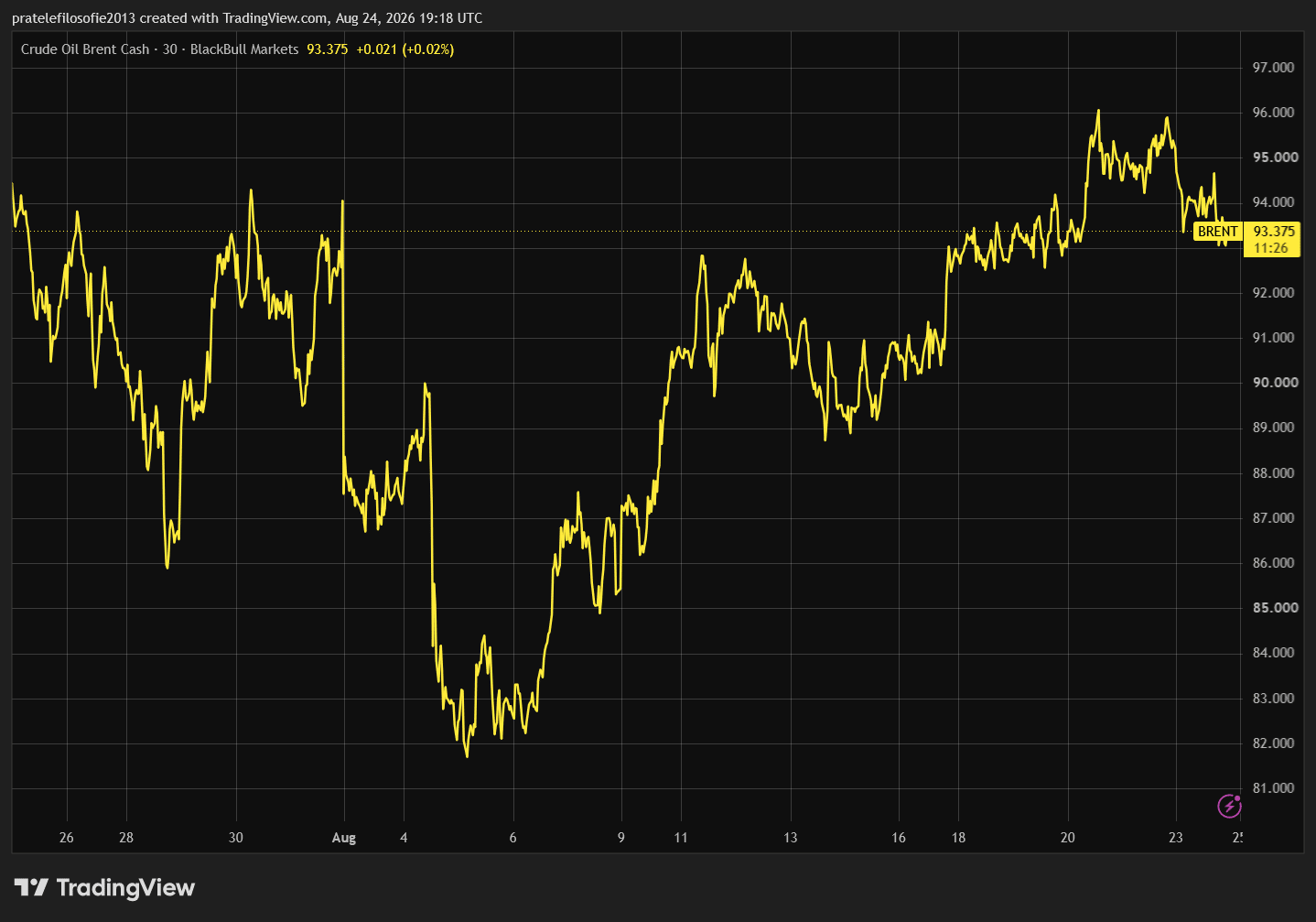
Mainly oil and natural gas on the Amsterdam exchange reacted to this confusing situation. Oil strengthened by more than 6% over the week. Natural gas for Europe also rose by 6%, but with the difference that its price is now at a maximum. So any further growth is problematic. For oil, we haven't even reached the psychological threshold of $100 per barrel yet. Two reasons are currently cited for why oil prices remain relatively low.
Oil stays below $100
The first is that more tankers are passing through the Strait of Hormuz illicitly than both sides admit. The second reason is that demand is mechanically falling due to higher fuel prices. If this decline lasts long, it will mean that GDP will fall, and consequently, the economy will enter a recession. And when we add still high inflation to that, we have a typical stagflationary scenario on the horizon.
But let's not get ahead of ourselves. There is still the possibility that both sides will reach an agreement and a larger drop in the prices of commodities passing through the Strait of Hormuz will occur. What is important for understanding what happened last week on the markets is that even Iran did not capture market attention enough for it to become the main topic.
US debt surpassed $40 trillion
Since there was no big news on the horizon, markets started looking all around. Until a bogeyman in the form of debt fell out of the closet. It wasn't entirely out of nowhere. US debt surpassed the $40 trillion mark.
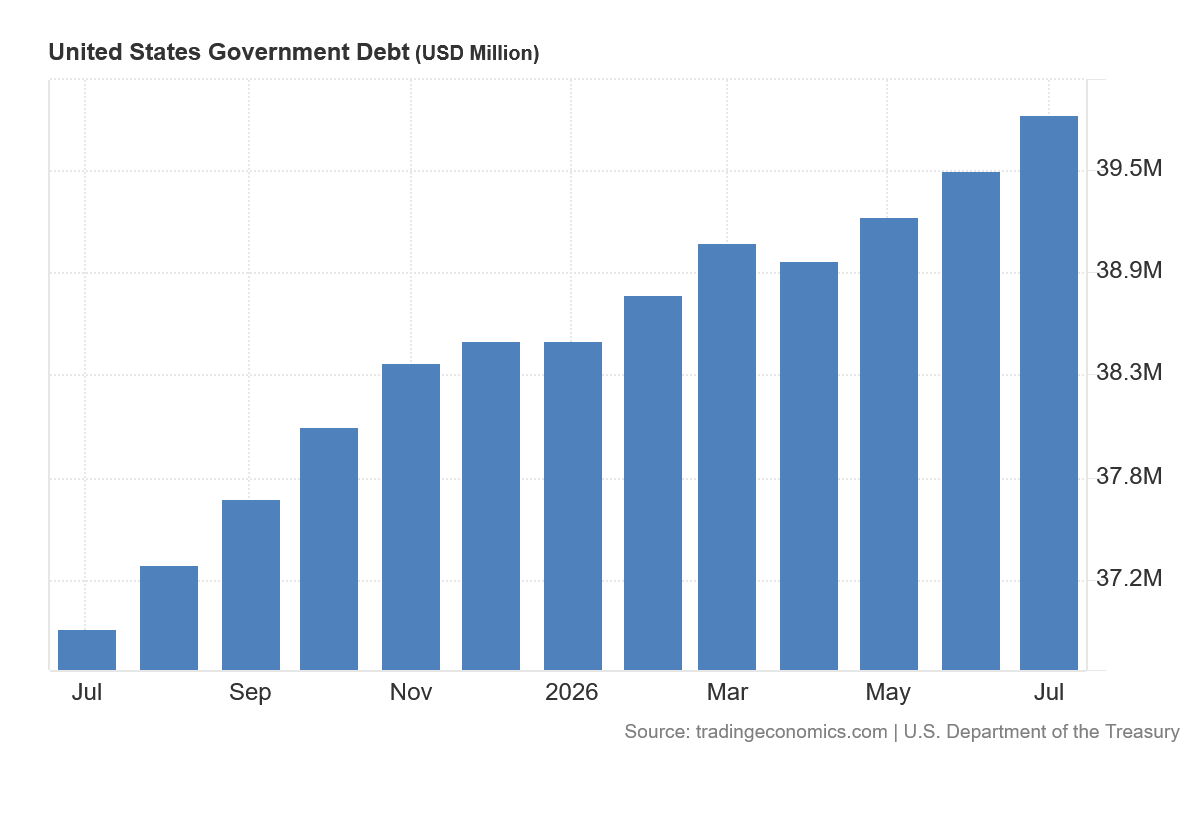
In the first ten months of the current fiscal year alone, the United States has already spent $963 billion on net interest, which is over $3 billion per day. Debt servicing has thus become the third-largest item in the US federal budget. The United States today spends more on interest than on defense.
However, these data have been known for a long time. The debt trajectory is very predictable. Moreover, the bond market has been reflecting this concern for a long time. Yields on long-term bonds are rising. The willingness to lend to the US at low interest is disappearing. And this is mainly for two reasons.
The first is obvious and mentioned above. The rising exponential of US debt will be hard to stop. In five years, the situation will be much worse. So lending money now for thirty years to a heavily indebted America requires quite a strong faith that the US administration will solve its problems.
And the second reason is indirectly linked to AI. Large tech firms, which were not used to taking on debt, are now issuing bonds. And these are draining significant liquidity from the bond market. Lending to Google at a good interest rate is far safer than lending to the US government.
Surpassing the psychological threshold of $40 trillion in debt thus reminded many investors that we have a big problem. But that's not all. The markets know it. And there is always the alternative that this problem will simply be postponed until later. However, that did not happen this time.
Treasury to double bond buybacks from September 9
The US Treasury added fuel to the fire. It announced that from September 9, it will at least double the volume of long-term US bond buybacks. For bonds with maturities from 10 to 30 years, the maximum volume of a single buyback will increase from $2 billion to at least $4 billion. This regime is currently set to last until November 4.
The official reason is to support market liquidity. That sounds technical and innocent. The problem, however, is the timing. The measure came a day after a sell-off in long-term US bonds pushed the 30-year bond yield to its highest level since 2007. Furthermore, the Treasury announced the change just two weeks after the regular quarterly refinancing. The market thus received a simple message: high long-term yields are starting to bother Washington.
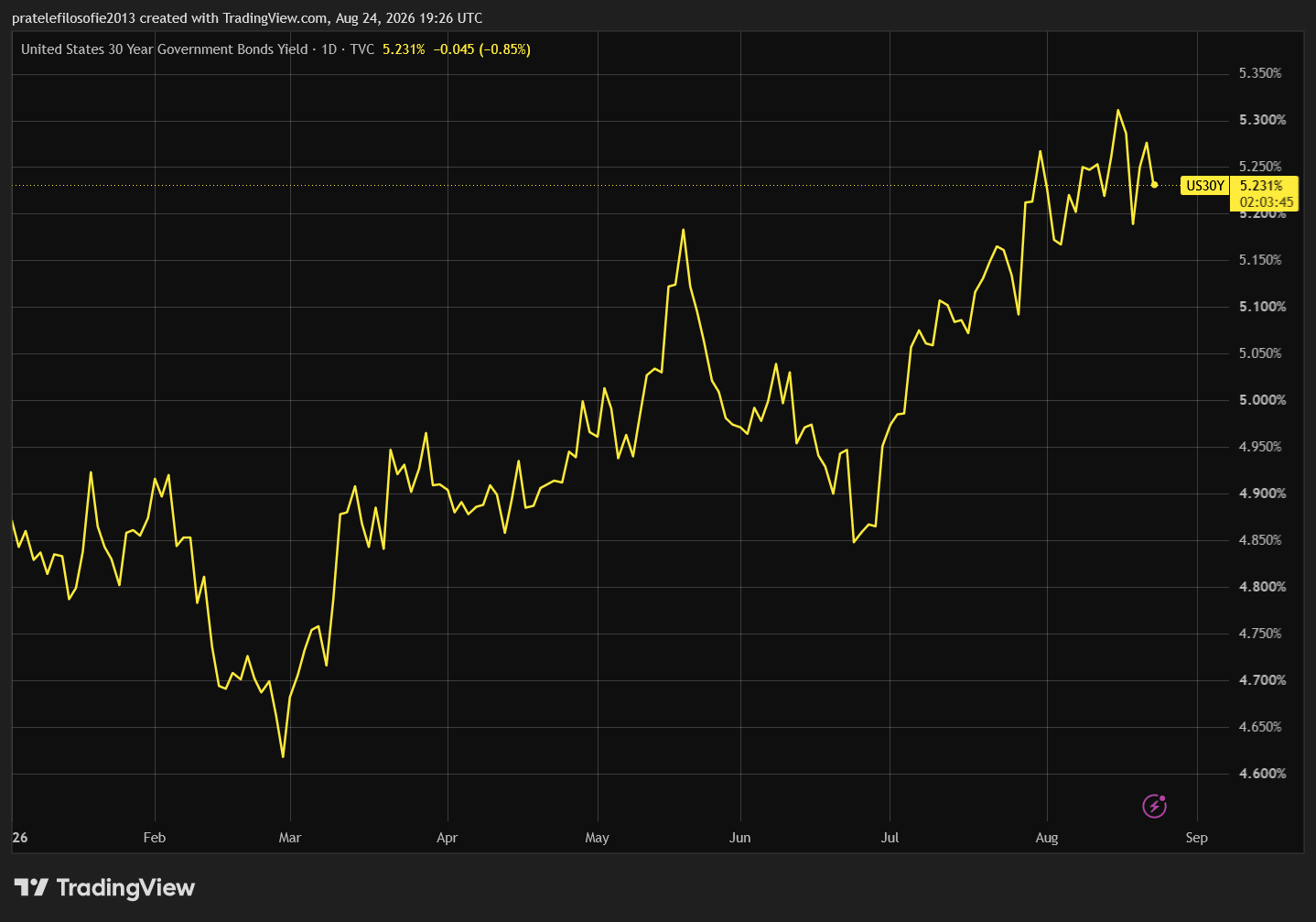
But the problems haven't disappeared. Firstly, we now have a clear threshold at which the US administration is bothered by high yield levels on US bonds. This level lies roughly at 5.3%. Speculators now have free rein. As soon as yields reach this level, it will mean the state will try to intervene.
The second problem, which we are already seeing, is that these interventions do not replace a systemic solution, which is the only one: to raise the central bank's interest rates. It's the same as the recent intervention by the Japanese Ministry of Finance. Intervention provides short-term relief but does not address the causes. If the fundamentals don't change, the effect gradually fades.
The real problem is fiscal
In the case of US bonds, the real solution is even more unpleasant. If inflation is behind the rise in yields, the Fed can hold rates higher or raise them again. But if the main problem is rising debt and a massive supply of new bonds, the central bank alone cannot do much. What would be needed above all is to reduce the budget deficit and convince investors that US debt will not grow at the current pace.
We can, of course, argue that Bessent's solution doesn't have to end on November 4. The Treasury can extend the buybacks or increase their volume again. However, it is not a systemic solution. The Treasury itself has maintained from the start that the program's goal is primarily to improve market liquidity, not to change the overall profile of US debt or save the market in times of stress.
The program primarily buys back older, less liquid bonds and cancels them after purchase. But the money needed for their purchase becomes another financial need for the Treasury from a debt management perspective and may be covered by a new issue of government bonds. In practice, the state is to some extent exchanging older and less tradable bonds for new and more liquid ones.
Why it's not quantitative easing
And most importantly, it is not classic quantitative easing. The bonds are not being bought by the Fed with newly created reserves, but by the US Treasury.
Bessent can thus improve market functioning. He can help dealers get rid of less liquid issues and perhaps push down the risk premium on the long end of the yield curve for a while. But the number of USD that Washington must borrow will not disappear. And that is the main message.
Gold strengthened by 3% after the announcement, Bitcoin headed up
This is also one of the reasons why gold and Bitcoin reacted so positively to Bessent's announcement. Gold strengthened by more than 3% immediately after the announcement, while the dollar weakened. Bitcoin also headed sharply upward.
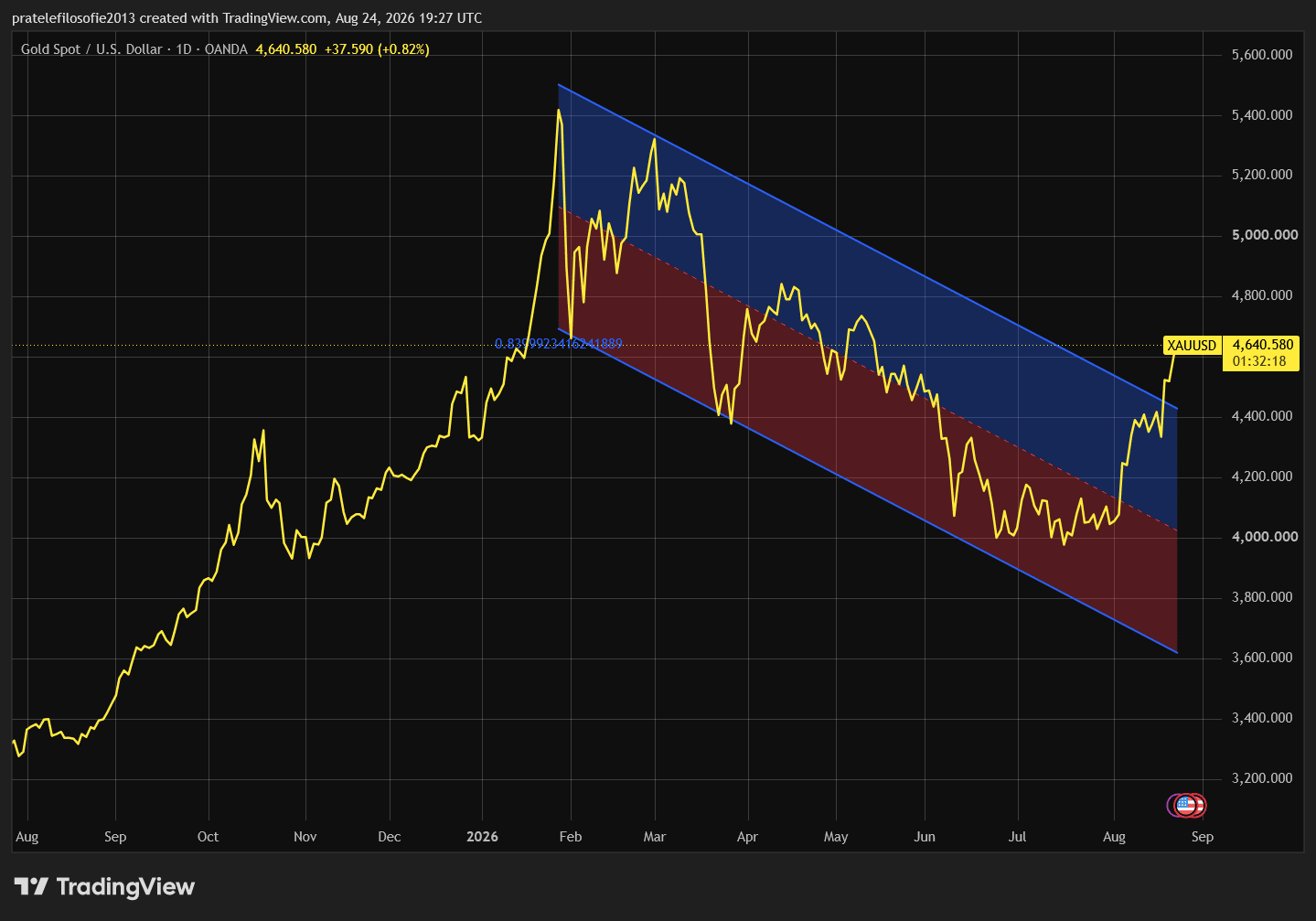
Investors may interpret the whole move as a signal that Washington is not willing to let long-term yields rise without limit. In other words, if the market starts making money too expensive for the US government, the state is ready to step in. This is exactly the environment in which talk of the so-called debasement trade begins again—a flight to assets whose quantity the government cannot simply increase.
Bessent's move complicates Kevin Warsh's concept
And one last thing. Bessent's solution is also problematic for Kevin Warsh's concept. Although he hasn't presented a finished version of the new monetary policy yet, the basic direction is fairly readable. Warsh has long advocated for a smaller Fed balance sheet, a smaller central bank footprint in financial markets, and simultaneously the possibility of lower short-term rates.
Even before taking the helm of the Fed, he argued that a smaller balance sheet could precisely create space for lower base rates. The logic is basically simple. The short-term price of money is determined by the Fed. The market should have much more say in how much America borrows for ten or thirty years.
This is precisely where the problem arises. While the Fed does not directly support the long end of the yield curve, the Treasury has now started buying back long-term bonds in larger volumes. Formally, this is not a central bank intervention. However, for an investor watching whether the US government will actually let the market determine the price of long-term debt, the difference is substantially smaller.
It's a bit of a catch-22. The Fed wants to have a smaller footprint in the market, but the Treasury has just increased its footprint.
The whole thing is even more interesting because Warsh himself has called for greater coordination between the Fed and the Treasury in the past. He even spoke of a new "accord" in which the Fed would communicate the target size of its balance sheet in advance and the Treasury its issuance calendar. So it's not simply a Bessent versus Warsh conflict. Rather, it's becoming unclear where monetary policy ends and debt management begins.
And that is a much more important question for investors. If the market is to decide long-term yields, why does the Treasury intervene the moment it stops liking the price set by the market?
US debt will keep returning to the markets
This week, markets thus opened a Pandora's box of massive debt. One could write about this risk for a very long time. Let's mention in conclusion the core of the problem, which is fundamental. The debt problem cannot be solved quickly.
A systemic solution needs to be implemented, but current markets function increasingly only with respect to the current situation. Not just the markets, but especially the US president. However, we are unable to solve this problem with current measures. The debt problem will repeatedly return to the stage. These periods will shorten more and more until one day the dam breaks.
And at that moment, the winner will be the one who has gold, silver, and cryptocurrencies in their portfolio. On the other hand, markets didn't collapse this time either. There's no need to look for catastrophe every day.
Stock Indices: Panic arrived, capitulation did not
Red lights flashed several times on the exchanges this week. Sell-offs occasionally seemed panicked, but the overall figures so far show a sharp awakening rather than the start of a widespread collapse. The VIX volatility index rose by 6.18%. The main problem wasn't a single piece of bad news, but an unpleasant cocktail of expensive oil, rising bond yields, and doubts about whether tech valuations had run too far.
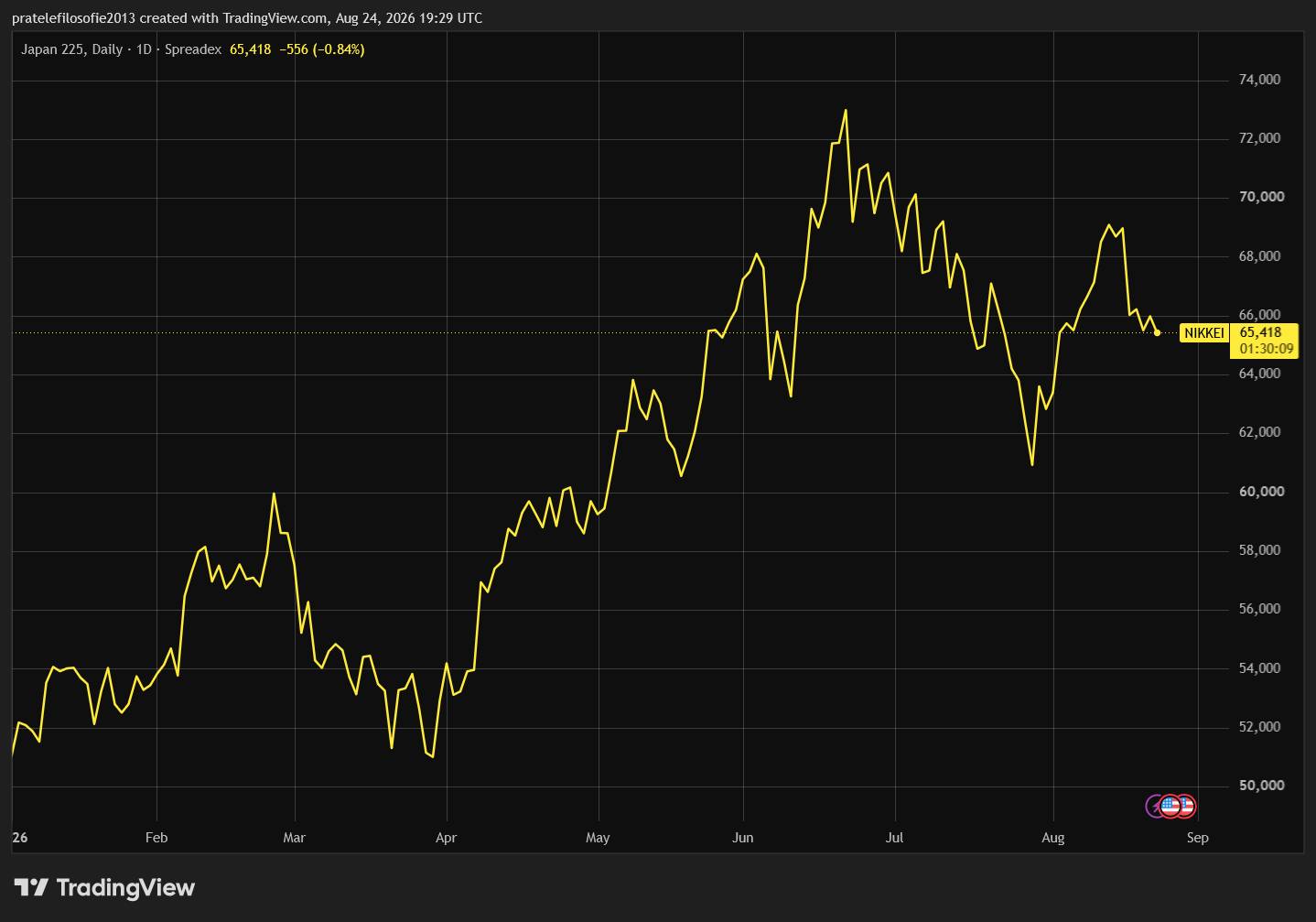
Japan took the biggest hit. The Nikkei 225 plummeted by 4.26%, as the stock sell-off met tension in the Japanese bond market. The yield on ten-year Japanese bonds approached 3%, fully opening the question of inflation, public spending, and the sustainability of cheap financing.
Nervousness was also seen in South Korea, where the KOSPI fell by 5.8% during Wednesday, only to gain almost 6% back the following day. That was no longer a calm repricing of risk, but a classic exchange seesaw. Over the whole week, the KOSPI ended up losing only 0.93%.
Asian markets were saved by the Hang Seng, which added 3.55%. Hong Kong thus went against the global trend, supported mainly by tech, commodity, and selected pharmaceutical titles.
Europe held up better, but there were few reasons for celebration here either. The DAX lost 1.15% and the French CAC 40 1.76%. Rising oil prices again fueled inflation fears, while high bond yields pressured stock valuations. The exception, as always, was the British FTSE 100 with a gain of 0.62%. It was helped by a high weighting of mining and commodity companies, for which more expensive raw materials played into their hands.
On Wall Street, tech darlings bore the brunt of the nervousness. The Nasdaq lost 2.05%, the S&P 500 shed 1.43%, and the Dow Jones a relatively mild 0.85%.
Friday's growth erased some of the losses, but it didn't solve the main question. The market was reminded again that trees don't grow to the sky. And when bond yields rise, tech dreams are valued much more soberly.
Bitcoin added more than 23% in a week
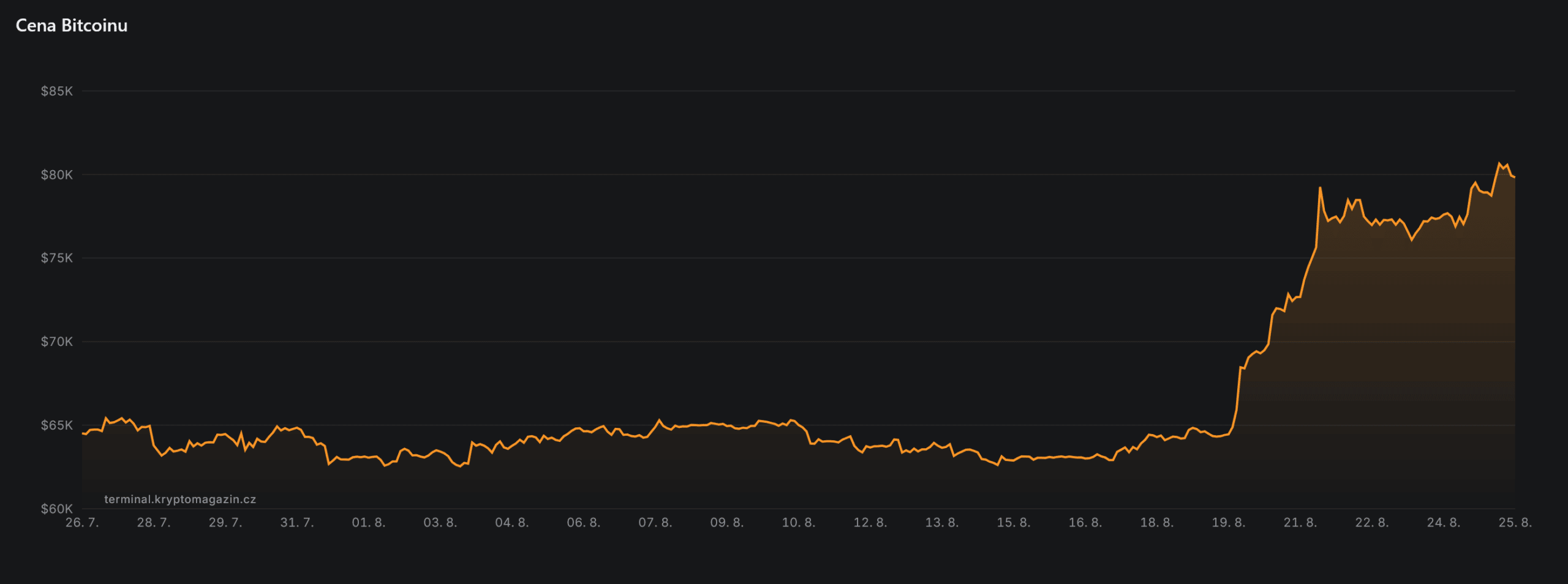
At the time of writing, the most famous cryptocurrency was trading around $78,000. This represented a very positive performance over the past week at the level of 23%. In layman's terms, Bitcoin went parabolic. As is common with such surprising growth, it's not a combination of one thing, but several things that create the ingredients for this explosive mixture. What were they?
US debt and the return of liquidity
The first and perhaps most significant thing was the US debt and the subsequent move by the Treasury. This only confirms the main thesis of Bitcoin proponents as a sound currency: that fiat currencies stand on shaky foundations. Politicians will always do everything to add more liquidity to the system.
However, this step means that in reality, we are just adding water to oil, even if at first glance we are trying to put out the fire. Problems of this nature can very quickly lead to very interesting questions about the Fed's independence and to asking who actually determines the price of money. And when these questions arise, it's better to have Bitcoin, cryptocurrencies, or gold in your portfolio.
Short squeeze accelerated Bitcoin's growth
The second moment, no less important, is precisely the short squeeze. Many people were betting on a drop in the price of Bitcoin. Precisely because of halving cycles and expectations of a final drop. Moreover, it was in a week when no major macro data was scheduled for publication.
Bitcoin was supposed to stay in the long-term summer range of $62,000 to $69,000. Many people expected a drop to $52,000 or lower. But when Bitcoin suddenly started growing, it was a disaster for short-sellers. They were subsequently joined by normal buyers, and so the price of Bitcoin experienced unprecedented growth. Volumes have increased in recent days.
Trump rediscovered cryptocurrencies
The third moment was Trump's meeting with crypto company representatives at the White House. Trump wanted to tell them to prepare for the approval of the Clarity Act. The meeting also stirred speculation that the US could buy Bitcoin directly.
Personally, however, I consider these reports to be communication noise. The war in Iran showed us that Trump is capable of changing his mind literally from hour to hour. Here, it could also be about the election campaign. The crypto community was disappointed that the president who wanted to be the biggest crypto-president subsequently focused more on warfare for geopolitical reasons. Now he is trying to get back in the game.
What's next for Bitcoin?
The million-dollar question, of course, is what happens next? No one knows. It is important to work with many scenarios.
Bullish scenario: Bitcoin surpasses $85,000
If Bitcoin quickly reaches $85,000, then a change in the long-term trend is confirmed and the bear cycle is over. However, there are still many important and large resistances in the way of this breakthrough.
From the perspective of technical analysis, it is less likely. But we must not forget that technical analysis isn't everything. We might just see tension arise between the Fed and the US Treasury. In that case, the path to this goal would be cleared.
Neutral scenario: return to $72,000 or $68,000
Then we have a scenario with a Bitcoin drop. It could go to $72,000 or down to $68,000. In these cases, it will always be about price stabilization and profit-taking. Sentiment after such a large growth can turn at any time.
The paradox of the whole situation is that the price is rising because the Fed should raise rates. And that is not exactly a joyful prospect for Bitcoin.
Negative scenario: Bitcoin back below $68,000
And then we have the negative scenario. A drop back below $68,000. In this case, it could be that Kevin Warsh will be very hawkish at the Jackson Hole symposium and give the markets a signal to prepare for rate hikes.
Even in this case, it could be perceived positively, because Bitcoin would make that long-awaited final drop before the cycle change.
What to watch next week?
Investors will closely watch the bond market and yields on US long-term bonds. Bitcoin and gold price action will depend on that. Large volumes on Bitcoin signal that investors' buying appetite has returned.
As for macroeconomic data, an important figure will come on Wednesday when we learn the PCE inflation rate for July. Subsequently, at the end of the week, Kevin Warsh will speak. The Fed chief will be expected to answer the question of how he wants to fight higher inflation and his stance on the Treasury influencing US long-term bond yields.
Is he for state intervention or not? Or will we see a rhetorically brilliant speech that explains nothing because Warsh will swear that the Fed cannot anticipate anything?
Regarding corporate results, the last most important company awaits us: Nvidia. Investors will watch everything carefully. Recently, an unplanned price increase for chips due to rising memory chip prices caused a stir.
Experts are starting to talk about AI inflation. Is it a trend or a single event? More than the results themselves, however, investors will be interested in the outlook for future quarters. Nvidia's results have the potential to increase market volatility at least for this week.
I first became interested in investing in 2013, when I bought my first stocks. Through my studies of philosophy, I gradually became interested in political questions. This interest in political developments eventually led me to a deeper understanding of what is happening in financial markets. I have published my reflections in various Czech media outlets (Euro, Česká pozice, Ekonom, Hospodářské noviny, Novinky) as well as in international publications. Understanding the world of finance and being able to interpret it is today essential not only for understanding the financial system itself, but also the world around us. Connecting events and analyzing developments from multiple perspectives is my passion. In my free time, I focus on popularizing philosophy on the YouTube