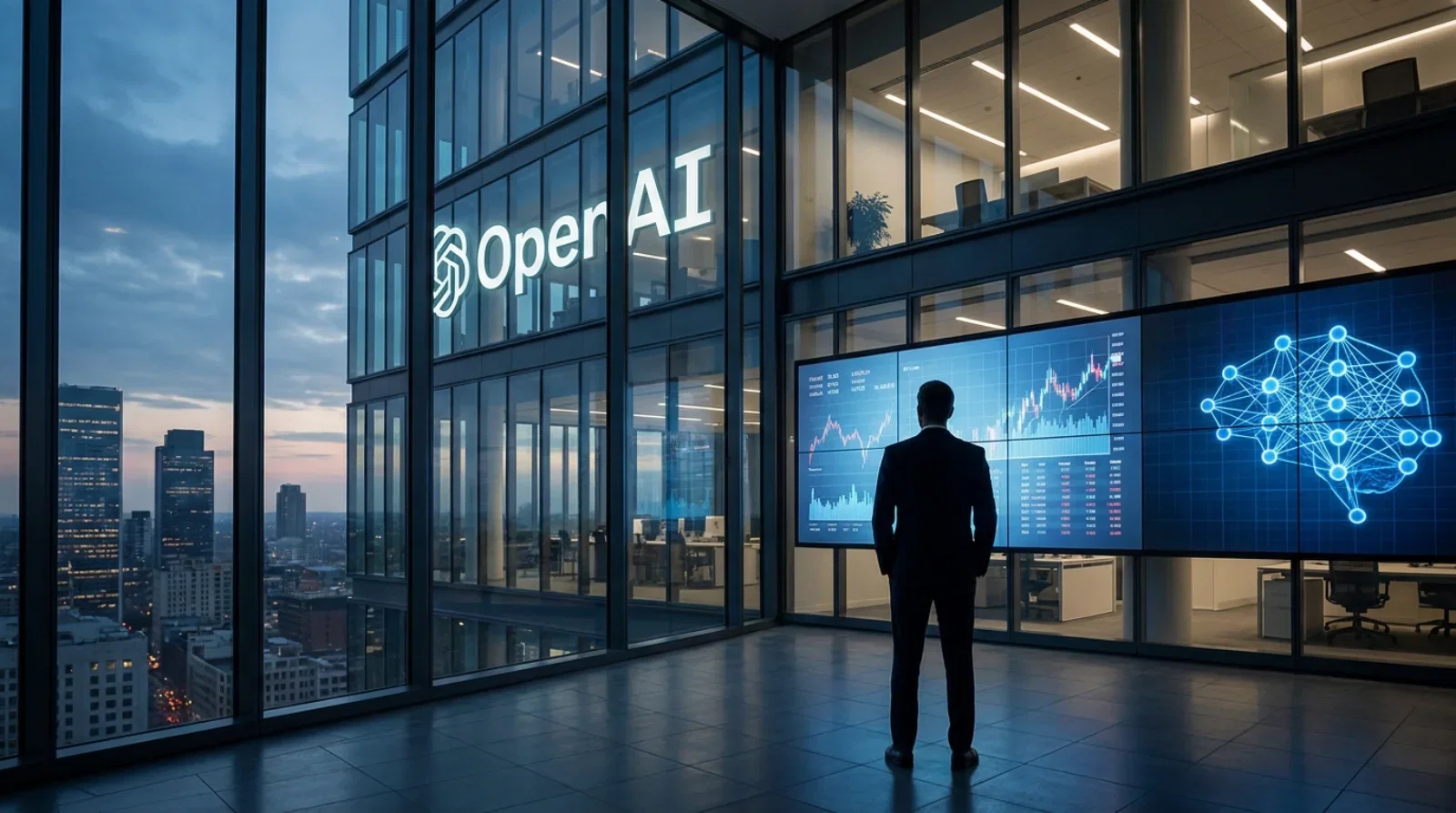
OpenAI Considers Another Massive Investment Round Before Going Public
ChatGPT creator OpenAI is negotiating a new investment round that could value the company at a staggering $1.2 trillion. Despite growing investor interest, CEO Sam Altman has indicated that the expected IPO is being pushed back to 2027.
OpenAI Valuation Heads for Records: Investors Offer Trillions Before IPO
OpenAI could secure tens of billions of dollars more from private investors before even hitting the stock market. According to the Financial Times, the creator of ChatGPT is in preliminary talks for a new investment round that would value the company at approximately $1.2 trillion. If such a valuation is confirmed, it would represent an increase of more than 40% in just a few months.
Unrelenting Investor Hunger for a Stake in OpenAI
Talks are still in the early stages, and final terms may still change significantly. Furthermore, according to Financial Times sources, the initiative did not come directly from OpenAI management, but from investors themselves. They are striving at all costs to increase their exposure to one of the largest and most influential private technology companies today.
This enormous interest comes shortly after a previous success. OpenAI completed a massive financing round as recently as the end of March this year. As part of that round:
- The company secured investor commitments totaling $122 billion.
- Its post-money valuation reached the $852 billion mark.
- OpenAI management has officially confirmed this record-breaking amount.
New Models as an Engine for Rocket Growth
Current investor optimism is primarily driven by the acceleration of growth that followed the launch of the new generation of artificial intelligence. Key milestones included the summer and autumn premieres:
- July: Successful introduction of the GPT-5.6 model family.
- September: Launch of the significantly more powerful GPT-6 Astra model.
OpenAI describes the Astra model as its most capable and advanced widely deployed system to date. During its premiere, the company highlighted a fundamental shift in cybersecurity, which is a key factor for commercial deployment.
According to the Financial Times, the company's revenue also jumped following the release of version GPT-5.6. Annualized revenue reportedly exceeded the $40 billion mark last month, with revenue growing by approximately one-fifth immediately after the new model was deployed.
IPO Nowhere in Sight: Stock Market Entry Postponed
The new round of private financing is closely linked to the stock market entry strategy. Although the company filed a draft S-1 registration form with the U.S. Securities and Exchange Commission (SEC) in June, it is in no hurry to go public.
CEO Sam Altman has practically ruled out the possibility of an IPO next year. In a September interview, he justified his decision as follows:
"Given the current debates about AI safety, I don't think it would be the right time to become a publicly traded company."
Experts agree that the initial public offering (IPO) will most likely be pushed back to 2027 at the earliest.
Building a Financial Cushion for Development and Infrastructure
Securing additional private capital would provide OpenAI with the necessary resources for extremely costly development. Demands for computing infrastructure and top-tier engineers are constantly growing. According to available data, the company spent approximately $34 billion last year alone.
Although OpenAI declares it has sufficient resources following the March round, additional funding will provide a strategic advantage:
- Extension of the innovation cycle: The company can work undisturbed on research away from the pressure and scrutiny of public shareholders.
- Strengthening the position of existing partners: For long-term investors like SoftBank, this is an opportunity to increase their stakes, even though it delays their exit possibility.
- Infrastructure expansion: Preparation for even more demanding models of the future.
A current valuation of $1.2 trillion would place OpenAI among the world's elite and confirm its dominant position in the field of generative artificial intelligence.

I got into cryptocurrencies at the end of 2020 and quickly became a Bitcoin maximalist. I’m interested in what’s happening in the financial markets, and in my free time I travel around Southeast Asia. At KryptoMagazine, I’m in charge of news and video content.