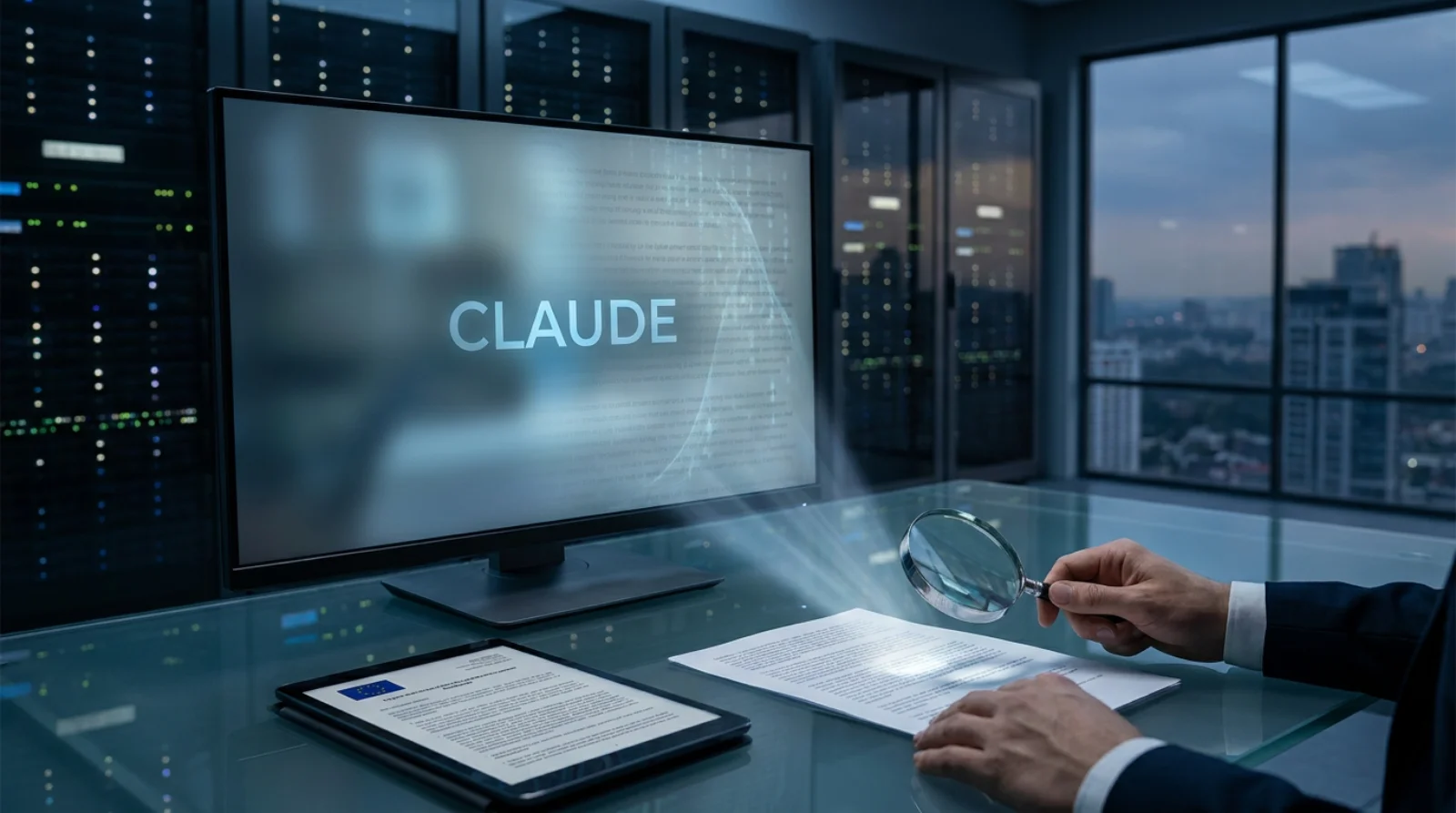
Claude to Begin Hiding Invisible Watermarks in Text
Anthropic is introducing invisible watermarks into texts generated by the Claude model. This move is a response to the European AI Act and the push for transparency in AI-generated content, with the marking designed to survive even when the text is copied.
Anthropic Responds to AI Act: Claude to Begin Invisibly Marking Generated Content
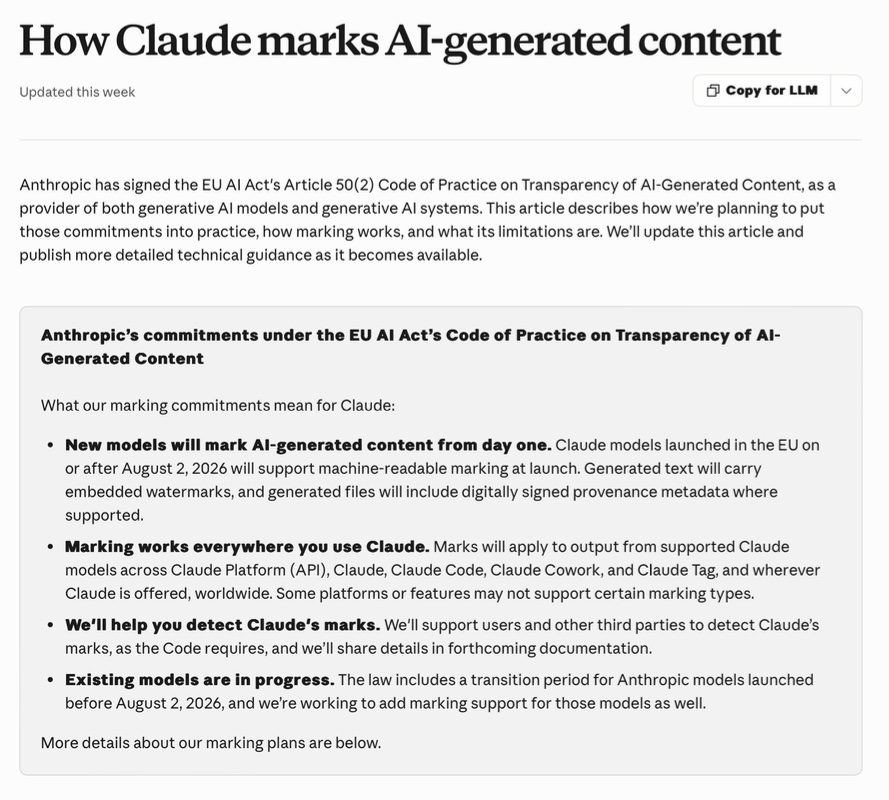
Anthropic has announced a significant update to its systems. It will begin adding machine-readable markings to content created using Claude models. For text outputs, this will involve an invisible watermark embedded directly into the structure of the text, while images and other supported files will receive digitally signed metadata. With this step, the company is responding to the strict rules of the European Artificial Intelligence Act (AI Act).
New Claude models launched in the European Union will support this feature starting August 2, 2026. Although the primary impulse is European legislation, Anthropic confirmed that the marking will be implemented globally across all supported models. The change will affect not only the Claude chatbot web interface but also the developer API and other corporate services. Work is currently underway to introduce this technology to older models, for which a transitional period applies.
Invisible Watermark: How Does Text Marking Work?
With standard text output, the user will not notice any change at first glance. Claude inserts a specific machine-readable code into the response that is invisible to the human eye.
Anthropic guarantees that the insertion of the watermark in no way alters the meaning, quality, or readability of the resulting text for the end user.
Key features of the text watermark:
- Copy resistance: The marking is an integral part of the text, so it remains preserved even when pasted into an email, document, or onto a website.
- Limited durability: The watermark can survive a certain amount of subsequent editing.
- Detection limits: In the event of significant rewriting, translation into another language, or combination with extensive external texts, the marking may become undetectable.
Digital Signatures for Files and Images
For non-text formats, the company has chosen a different technological approach. Supported files (for example, in PNG, JPG, or SVG formats) will contain digitally signed metadata based on the C2PA open standard.
This data makes it possible to identify that the file passed through the Claude system, while also serving as a safeguard for detecting potential subsequent manipulation of the visual content. Anthropic is currently developing mechanisms that will allow users and third parties to reliably verify these watermarks and signatures.
Interpreting the Marks: Beware of False Conclusions
The company strongly emphasizes that the presence or absence of a watermark is not absolute proof of a work's origin. The following scenarios must be taken into account:
"Finding a watermark does not automatically mean that the entire content was created by artificial intelligence. A user may use the system only for grammatical correction or translation of their own text, and yet the result will be marked."
- Hybrid authorship: Human-created text that has only undergone stylistic editing in Claude may be labeled as an AI product.
- False negatives: If a watermark cannot be found, it does not mean that AI was not used. Markings disappear after deep editing, and for files, metadata can be easily removed, for example, by taking a screenshot or converting the format.
Connection to European Legislation
This technological innovation is directly related to Article 50 of the European AI Act. Transparency rules, which came into force on August 2, 2026, mandate that providers of generative AI systems ensure the machine-readability of AI content markings. The goal is to increase transparency in the digital space and combat the spread of deepfake content or unmarked AI texts in matters of public interest.
Frequently Asked Questions
When will Anthropic start marking outputs from the Claude model?▼
Is the watermark in the text visible to the reader?▼
Can the AI content marking be bypassed?▼

I got into cryptocurrencies at the end of 2020 and quickly became a Bitcoin maximalist. I’m interested in what’s happening in the financial markets, and in my free time I travel around Southeast Asia. At KryptoMagazine, I’m in charge of news and video content.