China Eases Nvidia Blockade, Unable to Keep Up in AI Race Without US Chips
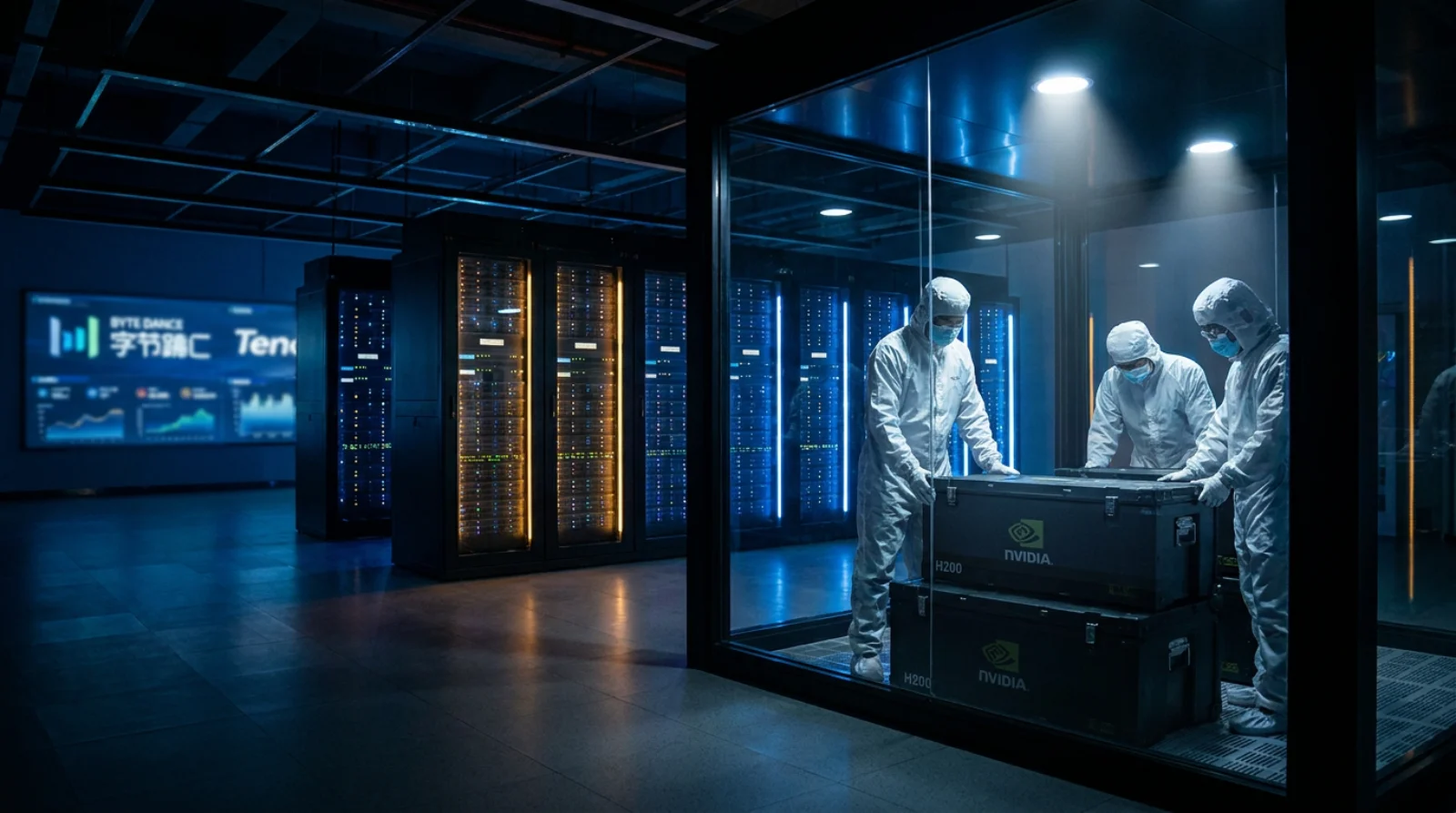
China has begun easing restrictions on the import of high-performance Nvidia H200 chips for giants like ByteDance and Tencent. Beijing is attempting to resolve the dilemma between supporting domestic manufacturers and the necessity of acquiring top-tier hardware to develop competitive artificial intelligence.
China has begun easing restrictions on the import of high-performance Nvidia H200 chips. The first small shipments have already been acquired by ByteDance and Tencent, while other tech firms could follow. Beijing is thus trying to resolve an uncomfortable dilemma: it needs sufficient computing power to develop the most advanced artificial intelligence, but at the same time, it does not want to undermine domestic chip manufacturers led by Huawei.
ByteDance and Tencent at the Front of the Performance Queue
According to information from the Financial Times, subsequently published by Reuters, ByteDance and Tencent have each received approximately 10,000 Nvidia H200 processors in recent weeks. Several other Chinese tech groups could receive approval for similarly large shipments in the near future.
This represents a significant shift from the situation in previous months. Although the US government allowed limited shipments of H200s to selected Chinese companies (including Alibaba, Tencent, and ByteDance), Beijing itself had been hindering their import until now. The situation is now changing, and the first shipments are actually reaching end customers. According to available information, US licenses allow some entities to purchase up to 100,000 of these processors.
Strategic Hardware Maneuvers
However, China does not plan to open the doors to the American company Nvidia completely wide. Regulators are reportedly putting pressure on firms to operate most of the purchased H200 units outside of mainland China. Hong Kong seems to be a logical choice, as it is in a different zone from a customs regime perspective. However, this solution brings new challenges:
- A shortage of suitable and modern data centers.
- Limited availability and high cost of electricity.
- Logistical challenges of managing infrastructure remotely.
Although the Nvidia H200 model is no longer the newest product in the company's portfolio, it still offers top-tier performance. The chip, based on the Hopper architecture, features 141 GB of HBM3e memory and a bandwidth of 4.8 TB per second, which is crucial for training AI models.
Beijing Protects Huawei, but Can't Do Without Nvidia Yet
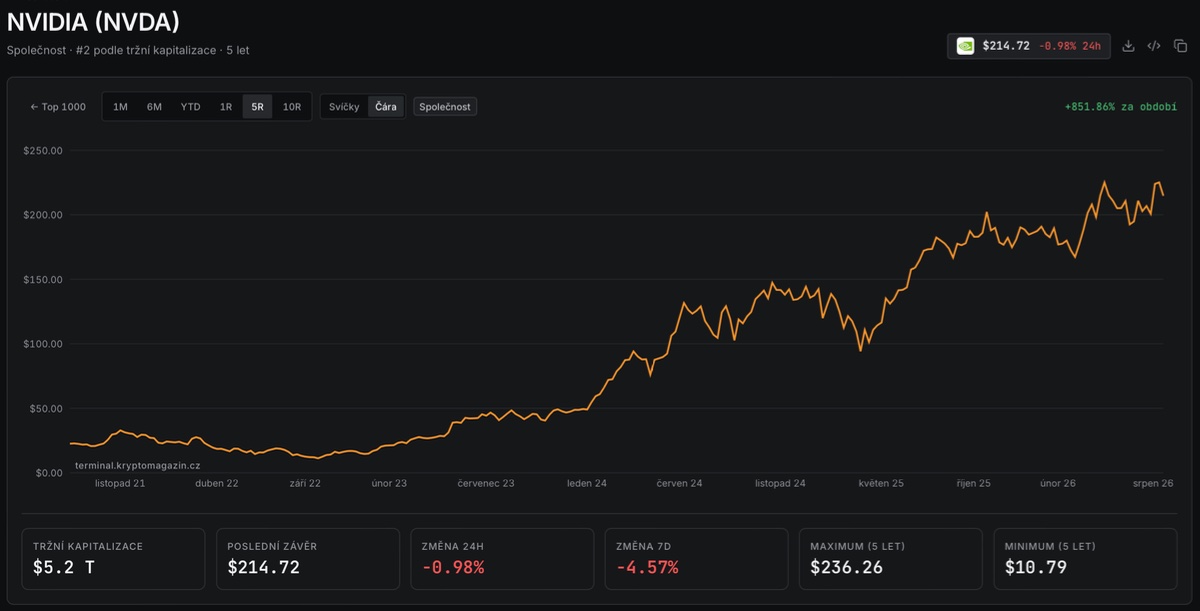
China's current strategy is a fragile compromise. The country is investing astronomical sums into its own semiconductor production in an effort to achieve technological independence. The main representative of this effort is Huawei, which has become Nvidia's most serious domestic competitor. In fact, Nvidia CEO Jensen Huang admitted in May that his company has already had to cede a significant portion of the Chinese market to Huawei.
However, domestic production has its pitfalls:
- Insufficient capacity: Chinese factories are unable to keep up with the explosive growth in demand.
- Technological barriers: US sanctions are hindering access to the most advanced manufacturing processes.
- Performance gap: For the most demanding training of large language models (LLMs), Nvidia hardware remains the irreplaceable standard.
The Race for AI Supremacy Intensifies
The pressure on computing capacity in Asia is constantly growing. Giants like Alibaba, Tencent, and ByteDance are investing billions into infrastructure. For example, Alibaba recently raised $10.2 billion through a stock issuance, which it intends to use specifically for AI development and chip purchases. Even so, the aggregate investments of Chinese groups are still lower than those of their American rivals.
Despite these obstacles, Chinese laboratories are managing to close the technological gap. Paradoxically, limited access to hardware has forced them into extreme efficiency when training models. Alongside the big players, ambitious projects like DeepSeek, Moonshot AI, or Z.AI are also making their mark, with their systems starting to match American ones in performance tests.
The easing of H200 chip imports does not mean an end to self-sufficiency efforts. Beijing is merely choosing a "middle path" – allowing the import of just enough hardware so that domestic AI firms don't lose momentum, but not so much that Nvidia regains a monopoly on the market.
Frequently Asked Questions
Why was China restricting the import of chips it needs?▼
Which Chinese companies have acquired Nvidia H200 processors?▼

I got into cryptocurrencies at the end of 2020 and quickly became a Bitcoin maximalist. I’m interested in what’s happening in the financial markets, and in my free time I travel around Southeast Asia. At KryptoMagazine, I’m in charge of news and video content.