Markets Under the Microscope: AI Has Begun to Devour the Market. From Duolingo to IBM, Who Will Be the Next Victim?
Markets are experiencing a hidden earthquake as AI begins to disrupt major players. From Duolingo's massive 80% crash to shifts at Microsoft and IBM, discover why the "index illusion" is masking a sector-wide transformation and what "vibecoding" means for your portfolio.
The Deceptive Calm: The "Index Illusion"
The atmosphere in the markets continues to thicken. While global indices currently appear stable, the situation beneath the surface is boiling. When examining the performance of individual companies, I am taken aback by various sell-offs. The so-called index illusion is manifesting in all its glory.
The market has experienced local earthquakes across several sectors simultaneously, yet the broader aggregate remained calm. This stability persists even though Nvidia, the stock with the heaviest weight in the S&P 500 index, published results that triggered a sell-off. However, it isn't the semiconductor sector currently causing the most concern.
The trouble spots range from finance through software firms to cybersecurity companies. Adding to the volatility, the American political scene has been turbulent, ranging from uncertainties surrounding tariffs to the recent attack on Iran.
The Miracle Named "Vibecoding"
Let's begin with the rapid developments in artificial intelligence. Practically not a single week passes without companies like Anthropic or OpenAI publishing news that shakes the markets. The concept of vibecoding has become an absolute hit.
The goal is not to evaluate whether current versions meet the technological requirements for massive practical deployment. The crucial point is that, although these models seem imperfect today, the development trajectory has clearly demonstrated how quickly they learn and improve.
"No one doubts that in six months, vibecoding will be on a completely different level. And since the principle of the stock exchange is based on projections into the future, investors are pricing in this risk right now."
Investors may be wrong about the time horizon during this pricing, but markets are generally efficient enough to reject mere stupidity or utopian visions. We can debate whether the drop was significant enough to represent a buying opportunity, especially in the case of Microsoft.
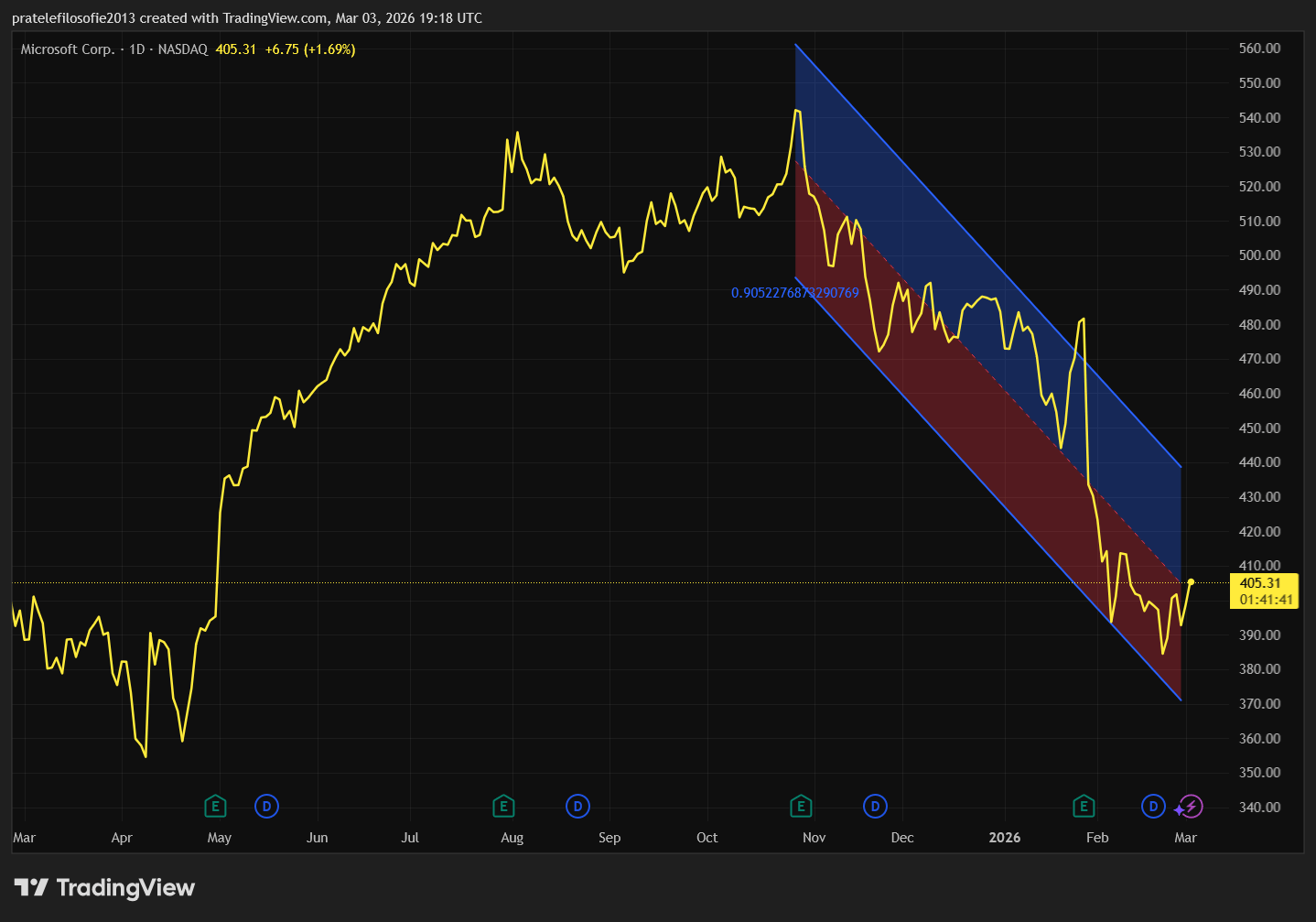
Besides providing software, Microsoft is currently one of the main pillars of artificial intelligence. Furthermore, while it seemed last year that its Copilot tool could lead global AI expansion, that dominance hasn't materialized. On the contrary, we've heard much less about it since the beginning of 2026.
Lost in Translation: Lessons from the Duolingo Freefall
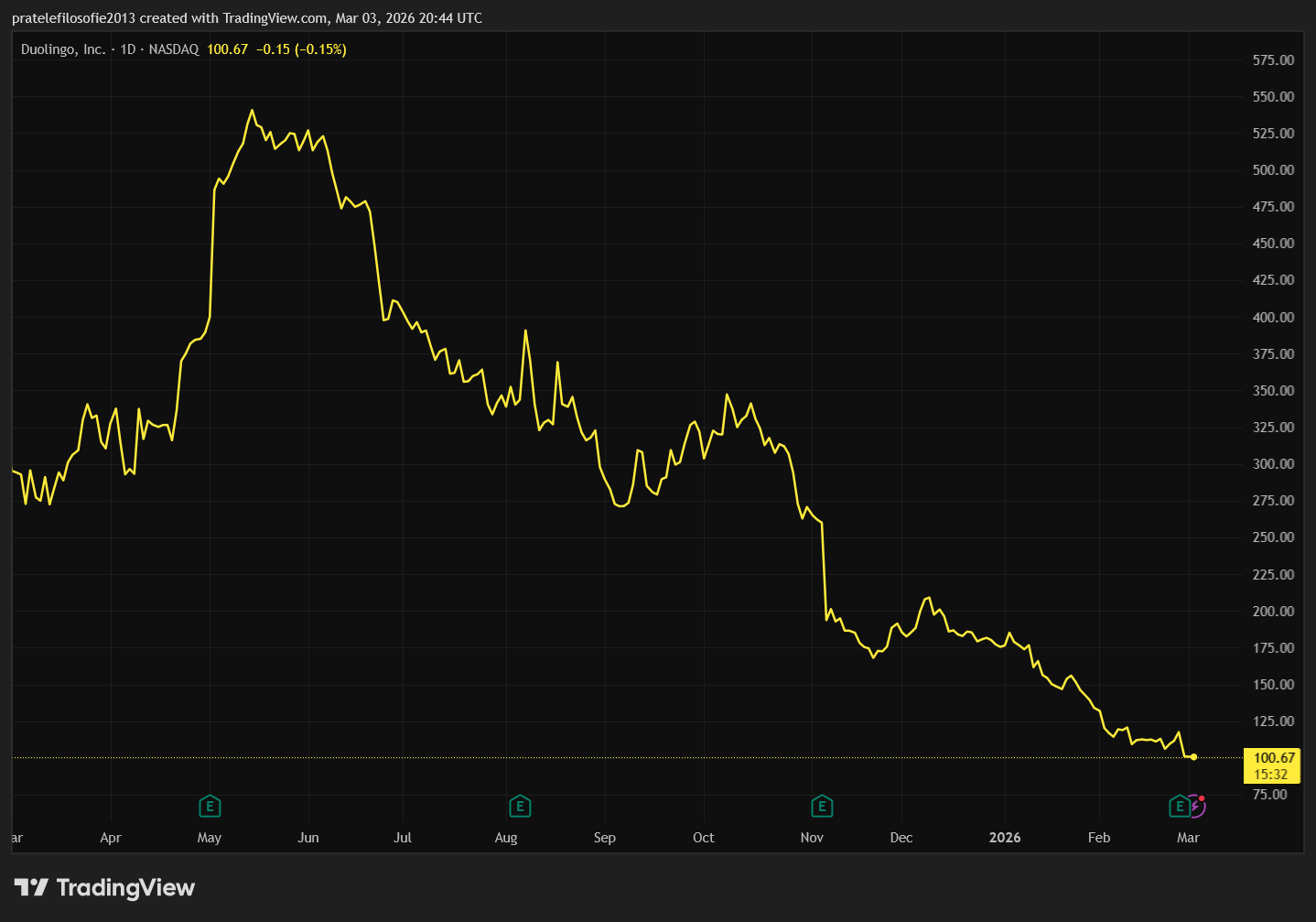
An even more compelling case is the stock of Duolingo, which released its financial results last week. The narrative is simple: if AI is expected to replace a large part of the business for cybersecurity firms—which also experienced a major slump—then replacing basic software should be a simple task for it.
This fear is clearly reflected in the stock price:
- In May 2025, one share cost nearly $541.
- After results were published, the price plummeted to $90.
- This represents a massive drop of more than 80%.
The story is complicated by the fact that revenues for 2025 actually grew at a brisk pace, and the company even surpassed the one-billion mark. From a fundamental perspective, the stock has entered a very attractive range, with its P/E ratio now at 12. Normally, this would indicate a heavily undervalued stock, particularly in the software services sector.
Will a Strategy Change Save Duolingo?
Investors were primarily spooked by the change in the company's strategy following recent results. The focus is shifting from revenue to the total number of users. Duolingo has decided to prioritize long-term user base building, setting a goal to reach 100 million daily active users by 2028.
To achieve this, the company will limit some aggressive monetization tactics, such as excessive ads or pressure for subscriptions. Management admitted that these steps worsened the user experience and damaged organic growth through recommendations.
Due to these changes, revenues are expected to grow by only 10 to 12% instead of the planned 20%. Investors interpreted this as an admission of weakness, assuming future declines.
The main issue here isn't time. If language models can completely devour these firms, one or two extra years solve absolutely nothing. Crucially, the growth story has stopped. It remains to be seen if the business can find stability in a state that generates profits. This development may serve as a precursor for the entire industry.
A Double-Edged Sword: Cybersecurity on the Defensive
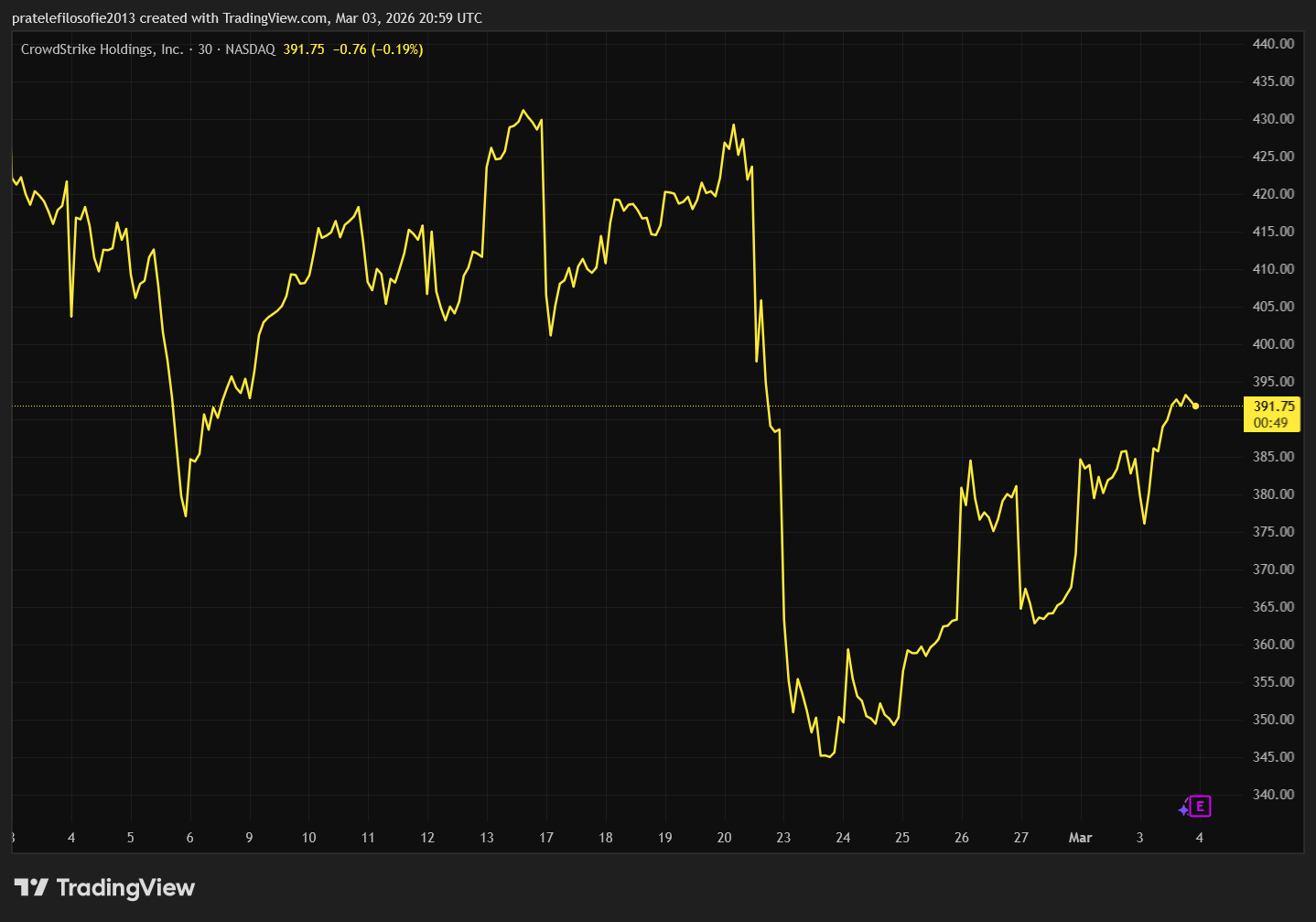
The cybersecurity sector experienced a hard correction last week. Shares of leaders like Zscaler and CrowdStrike shed over 10%. These drops are not merely due to cautious annual outlooks, but primarily due to growing Wall Street nervousness around artificial intelligence.
This presents a huge challenge:
- Defense costs are skyrocketing as companies develop their own AI-based systems.
- Attackers are actively using generative AI for more sophisticated attacks.
- Investors fear traditional giants like Palo Alto Networks won't monetize innovations fast enough to prevent disruption.
Twilight of the Dinosaurs: The Blue Giant Stumbles
The collapse of IBM stocks was the icing on the cake. This mastodon of the technology sector was previously considered a stable pillar. It possesses significant resources to buy up threatening AI innovations. Yet, the market showed that even this might not be enough; the stock plummeted by more than 13%, its deepest loss since the dot-com bubble burst.
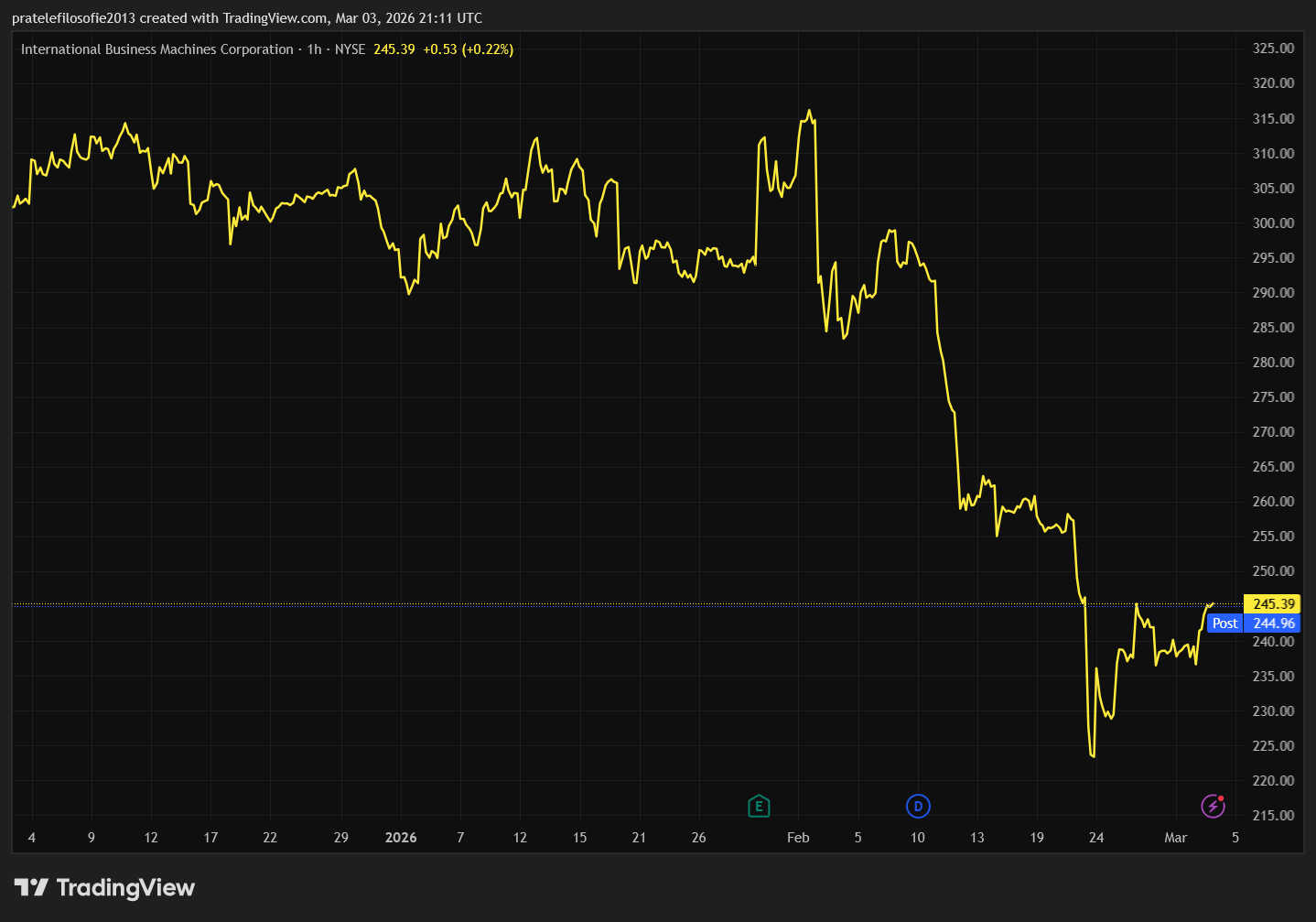
Behind this bleeding is Anthropic and its new Claude Code model, which can automate the management of the ancient COBOL programming language. Maintenance of COBOL in the banking sector has generated huge profits for IBM. Investors now face the reality that AI is devouring the most profitable divisions of traditional IT dinosaurs.
The Battle for Profit Margins is Just Beginning
The conclusion for investors is clear: Keep a cool head and avoid extreme views.
- Extreme 1: An apocalypse for the software sector, where only worthless companies remain.
- Extreme 2: Denial of any fundamental change brought by AI.
The reality lies in the margins of these companies. Investors loved this sector for dynamic growth and high margins (often 60–80%). To prevent customers from leaving for language models, companies will resort to across-the-board discounts and expanded offers, inevitably pushing margins down.
There is room for a decline, and finding a new bottom may take a long time. Stock prices in this sector will undergo a revaluation that fully accounts for future profitability.
Until then, investments here remain speculative. However, if one believes margins will only drop by single-digit percentages, the current slumps become a welcome long-term investment opportunity.
The Illusion of Infinite Liquidity: Shadow Banking
Beyond software, a classic Schumpeterian creative destruction is underway. However, the market faces another major issue: shadow banking. These are firms that substitute traditional banks in lending money to those who cannot access standard loans.
This private market has prospered by offering creditors favorable interest rates. But cracks are appearing.
Echoes of the Last Crisis
A prime example is Blue Owl. When investors decided to withdraw funds, the company blocked these withdrawals. While the debts haven't yet proven uncollectible, this signals a fundamental liquidity problem.
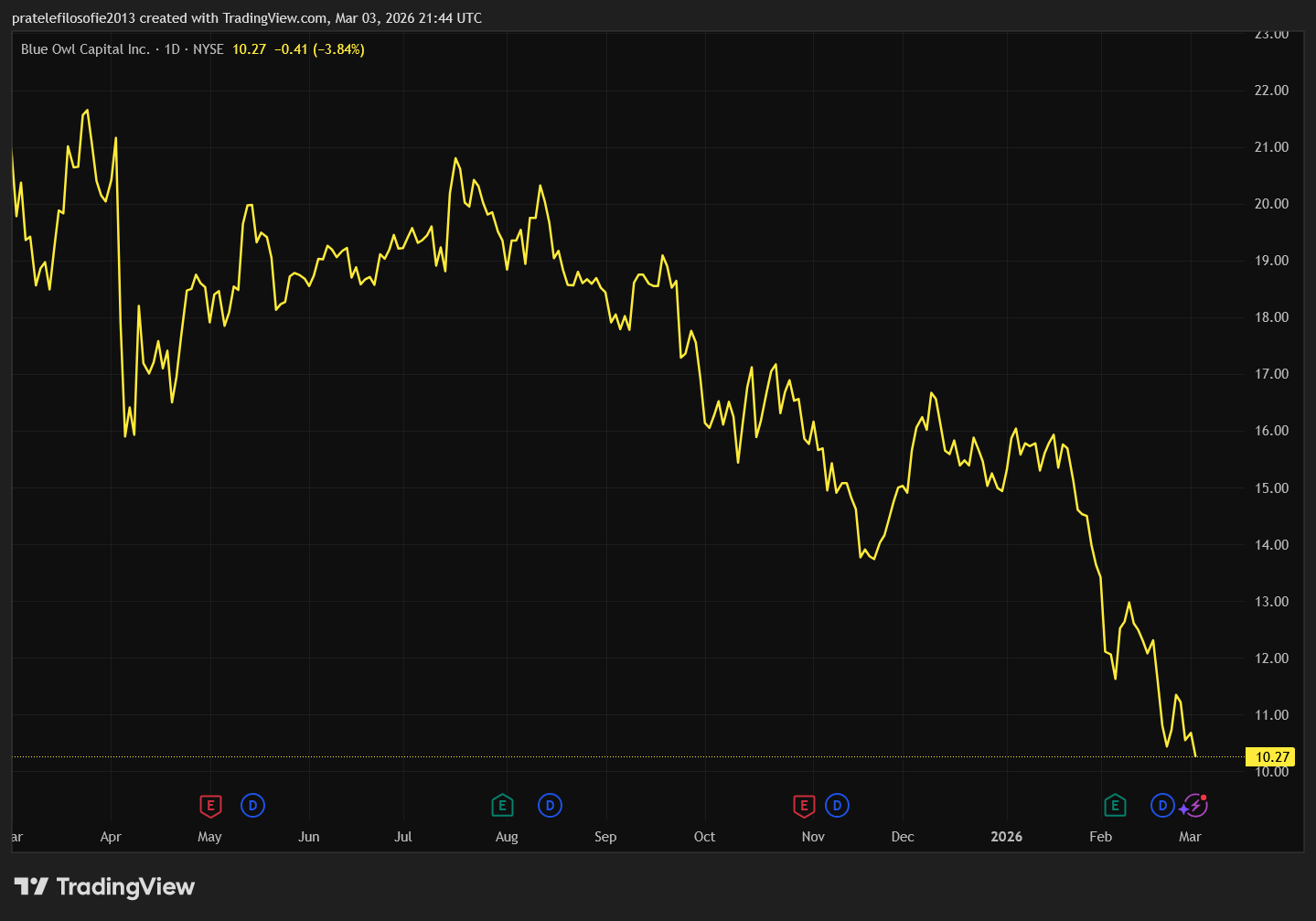
A large portion of borrowers in this sector come from the software industry, closing the circle of danger. Blue Owl's problems are also linked to financing CoreWeave's data centers.
Worryingly, some players are bypassing liquidity issues by bundling lower-quality debts into complex financial products. This practice strikingly resembles the securitized mortgages from before the global financial crisis.
Telegraphic Market News
Several other major events warrant attention:
- Tariffs: Donald Trump's administration aims to introduce 15% tariffs. Markets are already seeing mass buy-ups of tariff receivables to claim back from US Customs, suggesting the real effect may be muted.
- US Economy: Despite tariff revenues, the US deficit remains colossal with an unfavorable foreign trade balance.
- Geopolitics: The US and Israel attacked Iran. The action began on a Saturday to minimize market impact, but the optimistic "over by Sunday" scenario is not being fulfilled.
Nvidia: Perfection isn't Enough
In this tense atmosphere, Nvidia published results that exceeded analysts' estimates at all levels. Yet, shares weakened by over 7%. Why? Investors consider Nvidia stock expensive given rising risks. The turning point is continuously approaching where year-on-year revenue growth will slow to the 20–30% range.
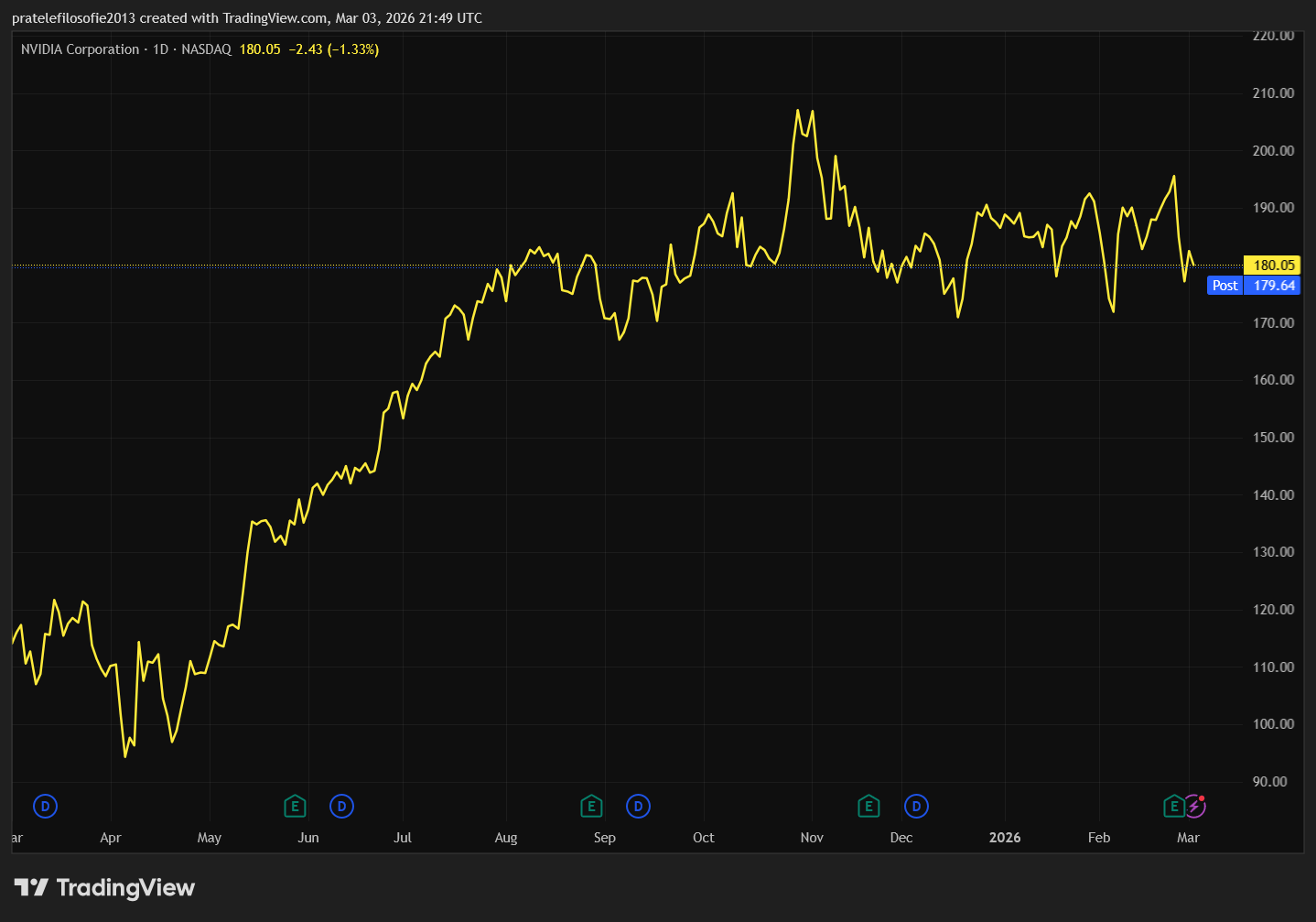
Competition is mounting from AMD (partnering with Meta) and unknown Chinese competition. Until doubts are dispelled, stock prices are unlikely to surpass the $200 mark quickly.
Stock Indices: Europe Under Pressure
We conclude with the weekly performance of stock indices, reflecting the conflict in Iran. European stocks reacted most negatively for two key reasons:
- Energy Dependence: Rising oil prices will drive up inflation undermine GDP growth.
- LNG Costs: An even bigger problem is represented by the prices of liquefied natural gas.
I first became interested in investing in 2013, when I bought my first stocks. Through my studies of philosophy, I gradually became interested in political questions. This interest in political developments eventually led me to a deeper understanding of what is happening in financial markets. I have published my reflections in various Czech media outlets (Euro, Česká pozice, Ekonom, Hospodářské noviny, Novinky) as well as in international publications. Understanding the world of finance and being able to interpret it is today essential not only for understanding the financial system itself, but also the world around us. Connecting events and analyzing developments from multiple perspectives is my passion. In my free time, I focus on popularizing philosophy on the YouTube