Google Maps are receiving one of their biggest AI updates in years
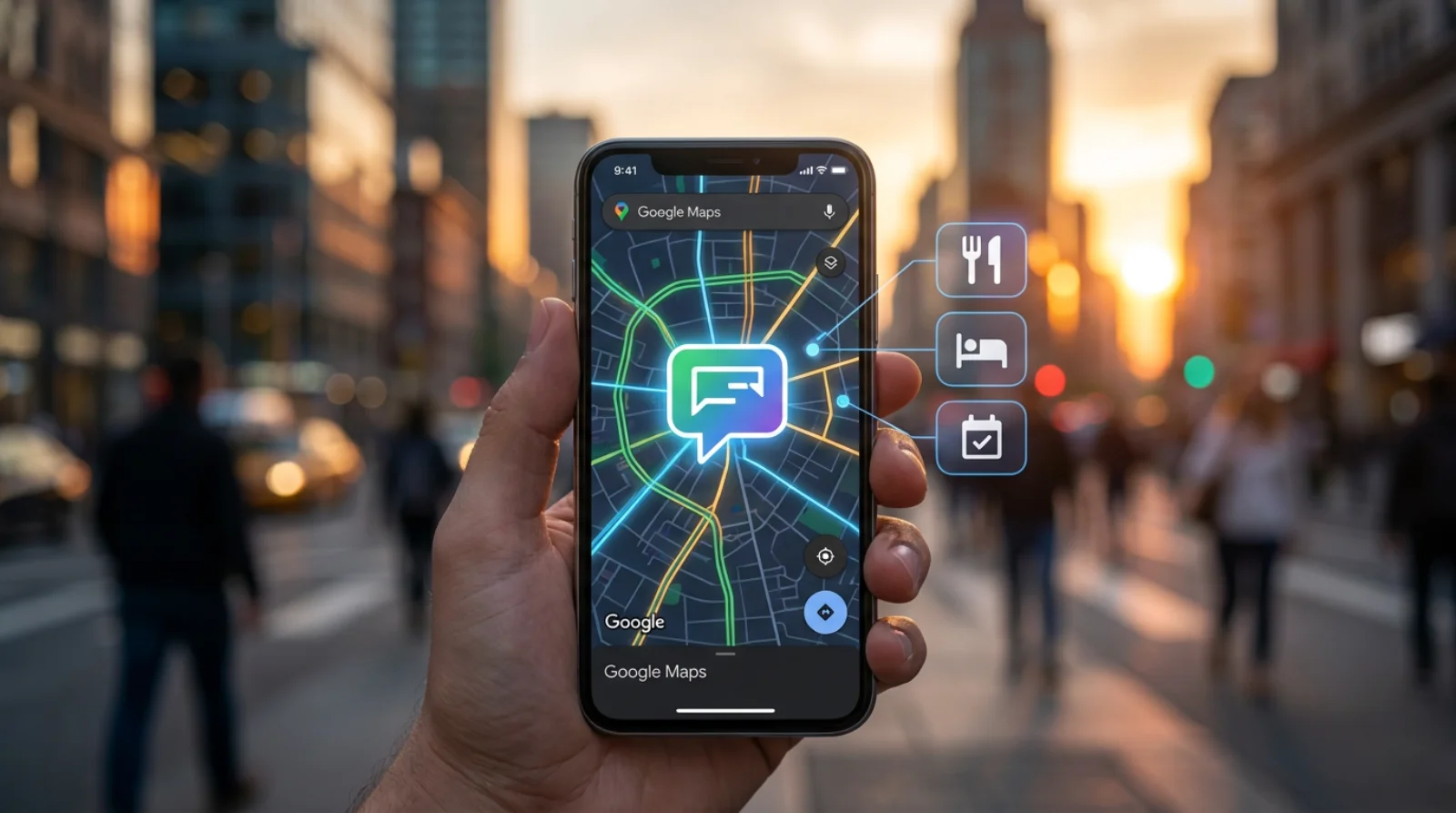
Google Maps is transforming into a personal AI assistant. Thanks to the integration of Gemini models and the Ask Maps feature, the navigation app will now help you choose a hotel, plan a trip based on emails in Gmail, or even prepare a food order for pickup.
Google Maps gain AI agents: They will order food and find a hotel for you
Google continues its massive integration of artificial intelligence into its most used services. The Ask Maps feature in the Google Maps app can now handle complex, multi-stage tasks. From finding and preparing a food order to finding the ideal hotel or discovering nearby events – with this step, Google is moving Maps from mere navigation toward a full-fledged personal AI assistant.
Google introduced Ask Maps earlier this year as a conversational interface built on advanced Gemini models. The main advantage lies in its naturalness: the user does not have to tediously set individual filters but can simply describe their needs in their own words. Google Maps benefits from a gigantic database of information on more than 300 million places and contributions from a community of over 500 million active users.
The latest update moves Ask Maps from the role of an advisor to the role of an executor. The AI is no longer just supposed to provide answers, but for selected tasks, it can perform specific steps directly for the user.
Google Maps as a shopping assistant: From food to hotels
Imagine you are driving home from work and get a craving for a specific dish. Instead of searching, you can simply ask Maps to find that food on your route. The AI will consider the following when choosing:
- Current route and arrival time.
- Opening hours of available restaurants.
- Your saved favorite places.
- Individual dietary restrictions.
Once you choose a restaurant, the AI can automatically add the requested items to the shopping cart. However, for security reasons, the order confirmation and payment itself still remain fully in the hands of the user. Google is collaborating on this feature with Square and Toast, with integration of the popular Uber Eats service expected to follow in the near future.
Smart planning for accommodation and entertainment
The AI agent is similarly effective when searching for accommodation. Instead of manually browsing through dozens of offers, you can enter a complex request, such as: "Find me a well-rated hotel under $120 per night in the center that is close to a gym and vegetarian restaurants."
Ask Maps instantly compares current prices, availability, and reviews. The user then just completes the reservation on the partner's website. In the same way, the system can search for concerts, comedy shows, or other cultural events and directly offer the option to purchase tickets.
Personal Intelligence: When AI reads your Gmail
Another significant milestone is the Personal Intelligence feature. A user can voluntarily link Ask Maps with their Gmail, allowing the artificial intelligence to work with data from confirmed hotel reservations, flight tickets, or restaurant bookings.
This synergy brings practical real-time benefits:
"If a user asks what they can do a few hours before their flight, Maps will automatically determine the hotel location and flight time from emails. It will suggest interesting places nearby and simultaneously calculate when it is high time to head to the airport to catch the flight."
Google emphasizes privacy – the connection with Gmail is turned off by default. In the future, expansion to other applications in the Google ecosystem, such as Calendar, is planned.
Conversation memory and real-time transit
With history activated, Ask Maps can remember previous queries. So, if you are planning a longer trip in stages, you can follow up on a previous conversation without having to explain the entire context again. In addition to AI news, Google is also strengthening core features and adding precise real-time information about delays for buses, trains, subways, or ferries.
Google is currently rolling out advanced food ordering and hotel searching first in the US market. However, personalized answers, conversation memory, and improved transit info are gradually spreading worldwide. The service is currently available in English in more than 150 countries and territories.
Frequently Asked Questions
Is the connection with Gmail secure?▼
When will the features be available in other languages?▼

I got into cryptocurrencies at the end of 2020 and quickly became a Bitcoin maximalist. I’m interested in what’s happening in the financial markets, and in my free time I travel around Southeast Asia. At KryptoMagazine, I’m in charge of news and video content.