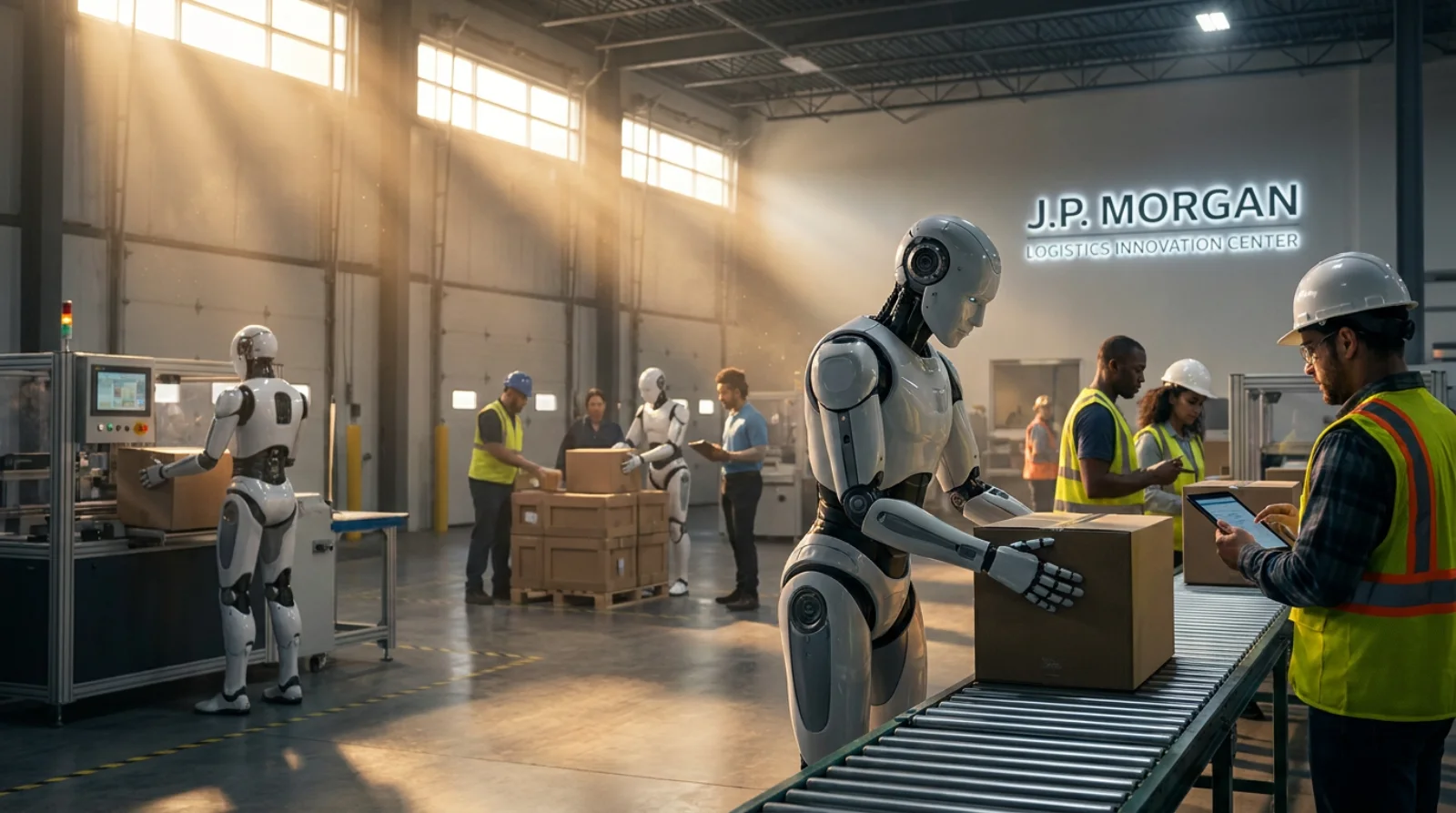
JPMorgan Expects Rapid Growth of Humanoid Robots in US Industry
A JPMorgan analysis predicts a revolution in American industry. Humanoid robots with operating costs around $10 per hour could fill hundreds of thousands of vacant jobs in factories and warehouses by 2030. Will the US bet on automation despite competition from China?
The Future of American Industry: Humanoid Robots as a Solution to Labor Shortages
American industry could become one of the primary markets for humanoid robots in the coming years. Analysts at investment bank JPMorgan expect their deployment to make increasing economic sense, especially in factories and warehouses where companies have long struggled with critical labor shortages.
According to a research note from the bank, the US manufacturing sector could be short approximately 1.6 million employees by 2030. JPMorgan estimates that this trend will create space for a new generation of machines:
- Humanoid robots could gradually fill roughly a quarter of vacant positions.
- With further technological progress, their share could even approach 50%.
Operating Economics: A Robot for a Third of a Human's Price
The main argument for faster automation is cost. JPMorgan estimates the operating cost of a humanoid robot in a warehouse at approximately $10 to $12 per hour, while a human employee can cost a company roughly $30 per hour. If the productivity and reliability of the machines can be increased, this difference will be virtually impossible for operators of logistics centers and production lines to ignore.
Current machine efficiency: The technology is not yet at the same level as a human. According to the analysis, it currently takes roughly two humanoid robots to achieve the productivity of one worker. However, the bank assumes this ratio will improve over time to 1.2 to 1.3 robots per human.
Barriers to Entry and Acquisition Costs
Despite attractive operating costs, the high purchase price remains an obstacle. Current machines suitable for industrial use sell for amounts around $120,000. However, the price tag on the invoice will not be the only deciding factor for companies. Key factors for return on investment will be:
- Lifespan and durability in demanding operations,
- low failure rate and easy servicing,
- the ability to work 24/7 without breaks,
- the actual volume of human labor replaced.
JPMorgan therefore does not yet see humanoids as a total replacement for all employees. In the first phase, they are intended to supplement the workforce where companies face long-term personnel limits or where the work is physically demanding and monotonous.
Global Race: China Leads in Production, USA in Regulation
While American companies fine-tune their strategies for mass deployment, Chinese competitors currently have a significant lead in manufacturing capacity. In 2025, approximately 15,000 humanoid robots were delivered worldwide, with Asian companies holding a dominant position:
- Unitree: more than 5,000 units delivered,
- AGIBOT: more than 5,000 units delivered,
- American manufacturers: currently remain significantly behind in production volumes.
Geopolitical Tensions and Security Stops
However, the growth of Chinese manufacturers in the US market is hitting tough regulation. The Federal Communications Commission (FCC) has placed advanced foreign-made robotic devices on the so-called Covered List. Products on this list cannot receive new FCC approval unless they receive a special waiver from the US Department of Defense. This restriction applies to both humanoid and quadruped robots.
Investment Euphoria Replaced by Disillusionment
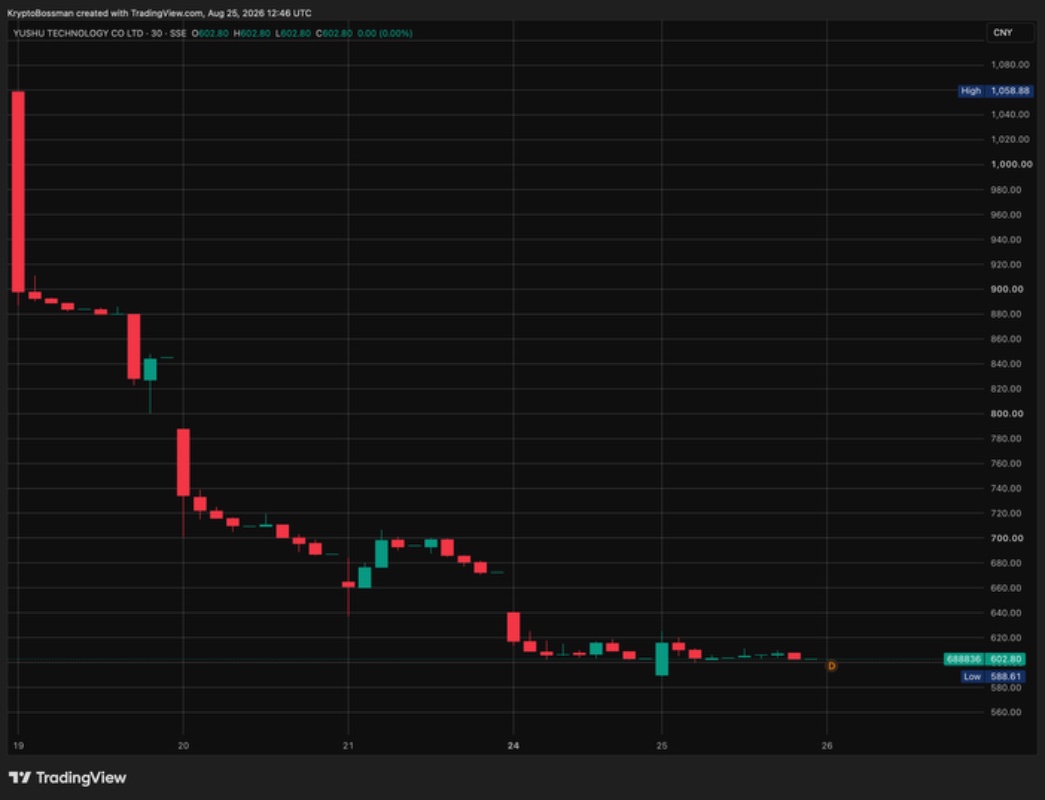
A symbol of the Chinese boom is the company Unitree, which went public on Shanghai's STAR Market in August. On the very first day, shares skyrocketed an incredible 460% above the IPO price, providing the company with capital amounting to 6.1 billion yuan. Although it reported revenues of 1.7 billion yuan in 2025 (of which 40% was exports), the market remains volatile.
By the end of August, Unitree shares had fallen 45% from their highs. This development confirms how speculative this sector still is. Large-scale commercial use still lags behind expectations, and most of today's machines serve more for:
- Scientific research and development,
- demonstration of technological capabilities,
- marketing and presentation purposes.
American industry will thus become a litmus test showing whether humanoid robots can move past the "toy" phase and transition to profitable mass deployment. As JPMorgan suggests, the deciding factor will not be the robot's ability to mimic human movements, but its ability to get the job done cheaper, faster, and more reliably.
Frequently Asked Questions
How much does it cost to operate a humanoid robot compared to a human?▼
How many jobs can robots fill in the US?▼
Who are the largest manufacturers of humanoid robots?▼

I got into cryptocurrencies at the end of 2020 and quickly became a Bitcoin maximalist. I’m interested in what’s happening in the financial markets, and in my free time I travel around Southeast Asia. At KryptoMagazine, I’m in charge of news and video content.