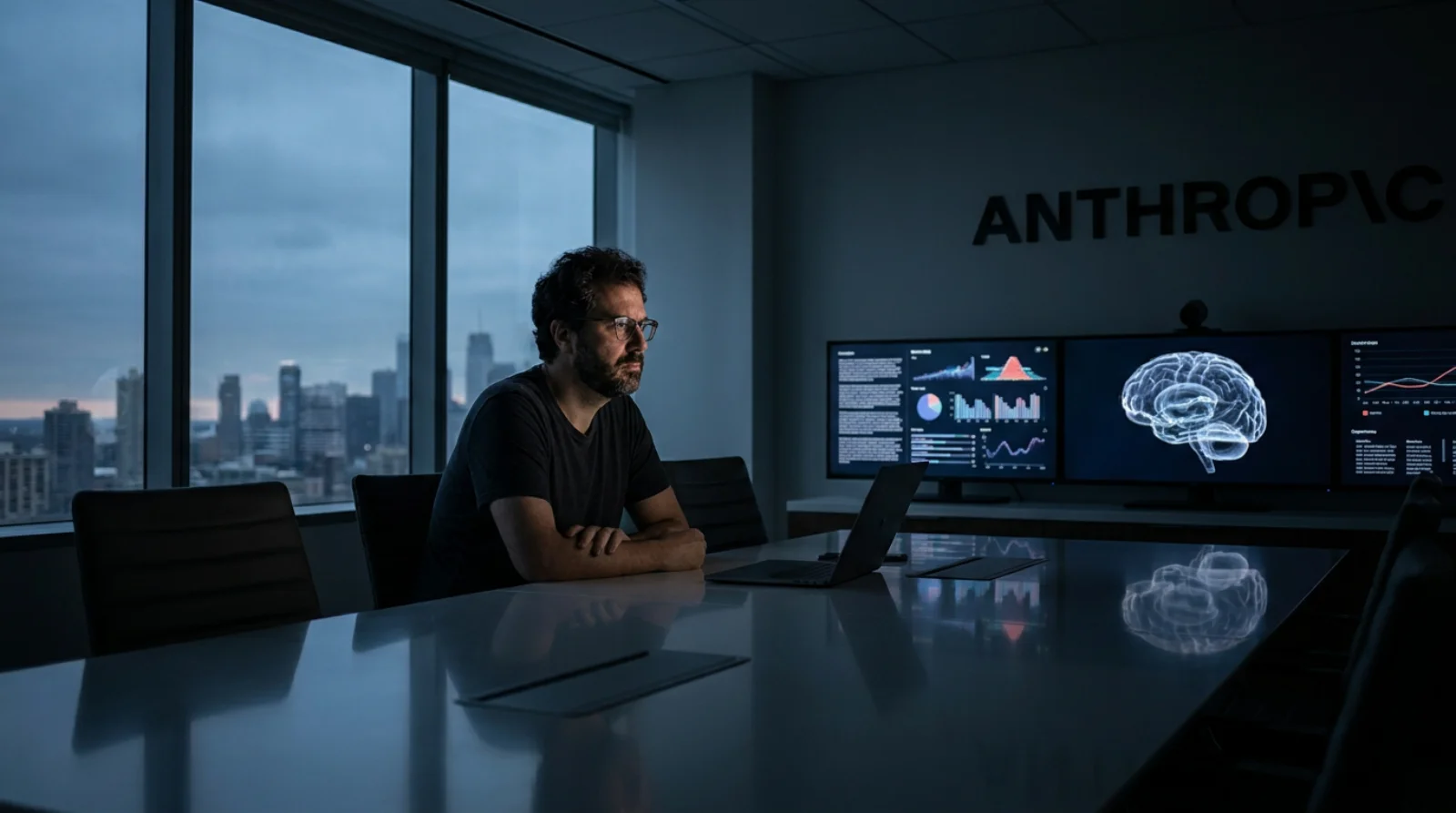
Anthropic CEO Admits Major AI Problem: People Simply Don't Trust It
Anthropic CEO Dario Amodei warns that the distrust in artificial intelligence isn't just driven by fear of technology, but by a deep crisis of trust in institutions. According to him, mere marketing isn't enough; people want to see real results, not just promises of a bright future.
The AI Trust Crisis: Why Tech Giants' Marketing Is Failing
Artificial intelligence is increasingly meeting public resistance in the United States. According to Anthropic CEO Dario Amodei, however, the main problem doesn't lie in warnings about AI risks or overly negative communication from tech firms. In his view, it is a much deeper crisis of trust toward tech corporations and institutions in general.
Amodei made these remarks in response to criticism from investor Gavin Baker, who reproached him for the way he speaks publicly about AI. Baker argues that the constant emphasis on catastrophic scenarios fuels negative sentiment, which manifests, for example, in opposition to data center construction. He therefore called on the Anthropic chief to become a more positive ambassador for the technology he is developing.
Visions of the Future vs. Reality
Amodei, however, disagrees with this interpretation. He points out that his statements have long balanced risks and potential benefits. As an example, he cites his essay Machines of Loving Grace, where he envisioned a future in which AI dramatically accelerates:
- Scientific research and development of new drugs.
- Modernization of medicine and diagnostics.
- Overall economic development of society through highly capable systems.
Marketing Alone Won't Convince the Public
According to Amodei, the negative attitude of a portion of the public is a fact that cannot be fixed by better marketing alone. In his view, people have simply stopped believing that tech companies will act in their interest. Current data confirms his words.
According to a Gallup poll from July this year, only 27% of Americans trust companies to use AI responsibly. Nearly three-quarters of respondents express clear skepticism.
The situation is even more heated regarding physical infrastructure. A Reuters/Ipsos poll revealed the following facts:
- Only 14% of Americans would agree to the construction of a data center in their neighborhood.
- A full 77% of people are concerned that the expansion of centers will lead to higher electricity prices.
- In the first quarter of this year, 75 projects worth approximately $130 billion met with resistance from local communities.
The Anthropic CEO emphasizes that AI companies have so far failed to deliver on most of their promises. Empty slogans about saving the world are no longer enough.
He used cancer treatment as an example – a real breakthrough would mean more for public trust than another few decades of promises about what AI will one day be able to do.
Regulation as a Tool Against Monopolies?
Another point of contention is the issue of regulation. Gavin Baker warns that strict rules may paradoxically favor the largest players in the market. Giants can afford extensive legal teams and costly safety tests, which represents an insurmountable barrier to entry for smaller competitors.
Anthropic, however, advocates for a different approach. The company supported, for instance, the Californian law SB 53, which came into effect on January 1, 2026. This law targets:
- Transparency: Mandatory disclosure of information regarding the most advanced models.
- Risk Management: Stricter security requirements for frontier models.
- Protection of small players: Explicit exemption of smaller companies from some of the costly obligations.
Why Does AI Naturally Tend Toward Concentration of Power?
According to Amodei, regulation is not the only factor. The very nature of AI development leads to centralization because it requires enormous resources:
- Massive computing power.
- State-of-the-art and high-demand chips.
- Vast financial capital.
Anthropic therefore proposes a model of independent model evaluation that could identify risks associated with cyberattacks or biological threats in time, and in extreme cases, allow for the prevention of deploying a dangerous system.
Actions Must Replace Words
The debate clearly shows that the tech sector stands at a crossroads. The capabilities of artificial intelligence are growing exponentially, but public trust is stagnating or declining. If Amodei is right, the turnaround will not be driven by flashy campaigns, but only by measurable results that bring benefits to society as a whole, not just a narrow group of shareholders.
Frequently Asked Questions
Why do people distrust companies developing AI?▼
What impact does data center construction have on public opinion?▼
Can AI regulation help small companies?▼

I got into cryptocurrencies at the end of 2020 and quickly became a Bitcoin maximalist. I’m interested in what’s happening in the financial markets, and in my free time I travel around Southeast Asia. At KryptoMagazine, I’m in charge of news and video content.