



Artificial intelligence has become one of the most important investment themes of recent years. The rise of generative AI, large language models and AI agents has pushed technology companies to spend hundreds of billions of dollars on new chips, data centers, cloud infrastructure and software development. For investors, this raises an obvious question: how can you invest in AI, and which parts of the market stand to benefit from its continued growth?
The answer is not as simple as buying shares of one well-known technology company.
AI represents an entire economic ecosystem. At the beginning of the value chain are semiconductor designers and chip-equipment manufacturers. Next come data center operators and cloud providers. Only further downstream do we reach the companies building AI models and applications themselves.
There are therefore several ways to gain investment exposure to artificial intelligence: through individual stocks, exchange-traded funds (ETFs), or indirectly through companies providing the infrastructure, energy and technologies required for AI development.
Why Are Hundreds of Billions of Dollars Being Invested in AI?
The current AI boom requires extraordinary amounts of capital.
Advanced models demand enormous computing power, and running them involves far more than software alone.
Companies need specialized chips, data centers, networking infrastructure, cooling systems and, above all, large amounts of electricity.
According to the International Energy Agency (IEA), capital expenditure by five major technology companies exceeded $400 billion in 2025 and is expected to rise by roughly another 75% in 2026.
A major driver of that spending is investment in data centers and AI-related infrastructure.
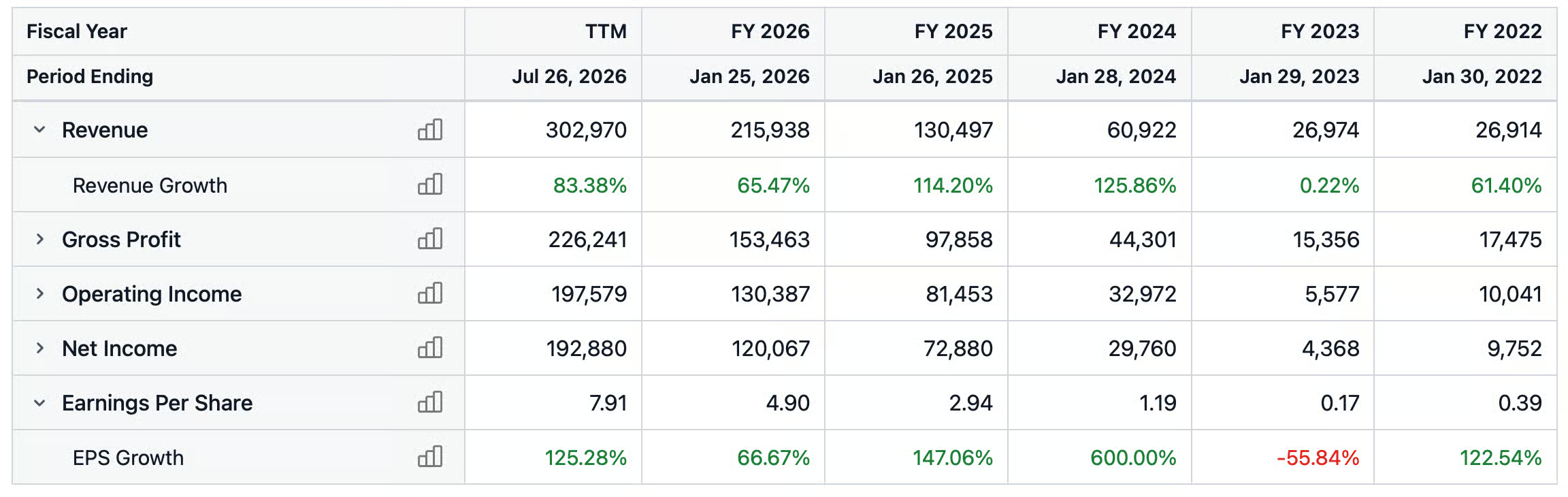
The scale of the market can also be seen in Nvidia’s financial results.
Its data center division generated $51.2 billion in revenue in the third quarter of fiscal 2026, up 66% year over year.
Data centers now account for the overwhelming majority of Nvidia’s revenue, even though the company was known primarily as a maker of graphics cards for gamers only a few years ago.
Investment opportunities related to AI therefore extend far beyond companies developing chatbots.
Capital is flowing through the entire supply chain.
The AI Investment Chain Starts With Chips
The first layer of the AI economy is hardware.
Training and running modern AI models requires specialized computing accelerators.
Nvidia is the best-known supplier, but the semiconductor industry is much broader than a single company.
Alongside chip designers, there are semiconductor manufacturers, equipment suppliers, memory producers and networking companies.
An AI server is not simply a GPU.
It also requires high-speed memory, CPUs, networking interfaces, power-management systems and a range of other components.
For investors, it therefore makes sense to distinguish between several different parts of the semiconductor market.
Nvidia and AMD design computing accelerators.
TSMC manufactures many of the world’s most advanced chips for major technology companies.
ASML supplies critical equipment used in cutting-edge semiconductor manufacturing.
Other companies operate in areas such as memory, networking chips and power systems.
One advantage of this part of the market is that hardware companies may benefit regardless of which individual AI model ultimately wins.
If OpenAI, Google, Anthropic, Meta and others continue competing to build more capable systems, all of them need computing infrastructure.
At the same time, semiconductors are a cyclical industry.
Manufacturing capacity can expand, competition can intensify and today’s exceptionally high margins may not last forever.
Other important risks include trade restrictions between the United States and China and the concentration of advanced semiconductor manufacturing in Taiwan.
Data Centers, Cloud and Energy Form the Second Layer of the AI Boom
A chip alone is not enough.
Tens of thousands of accelerators need to be installed in data centers, connected through high-speed networks, cooled and supplied with electricity.
This creates another major group of potential beneficiaries from AI investment.
Amazon, Microsoft and Alphabet provide companies with access to computing capacity through their cloud platforms, allowing customers to use powerful infrastructure without building their own data centers.
At the same time, these companies are among the biggest investors in their own AI infrastructure.
But the growth of data centers is also creating opportunities far beyond the traditional technology sector.
New facilities require construction equipment, transformers, substations, backup generators, cooling systems and electricity transmission infrastructure.
As a result, energy is becoming an increasingly important part of the AI investment story.
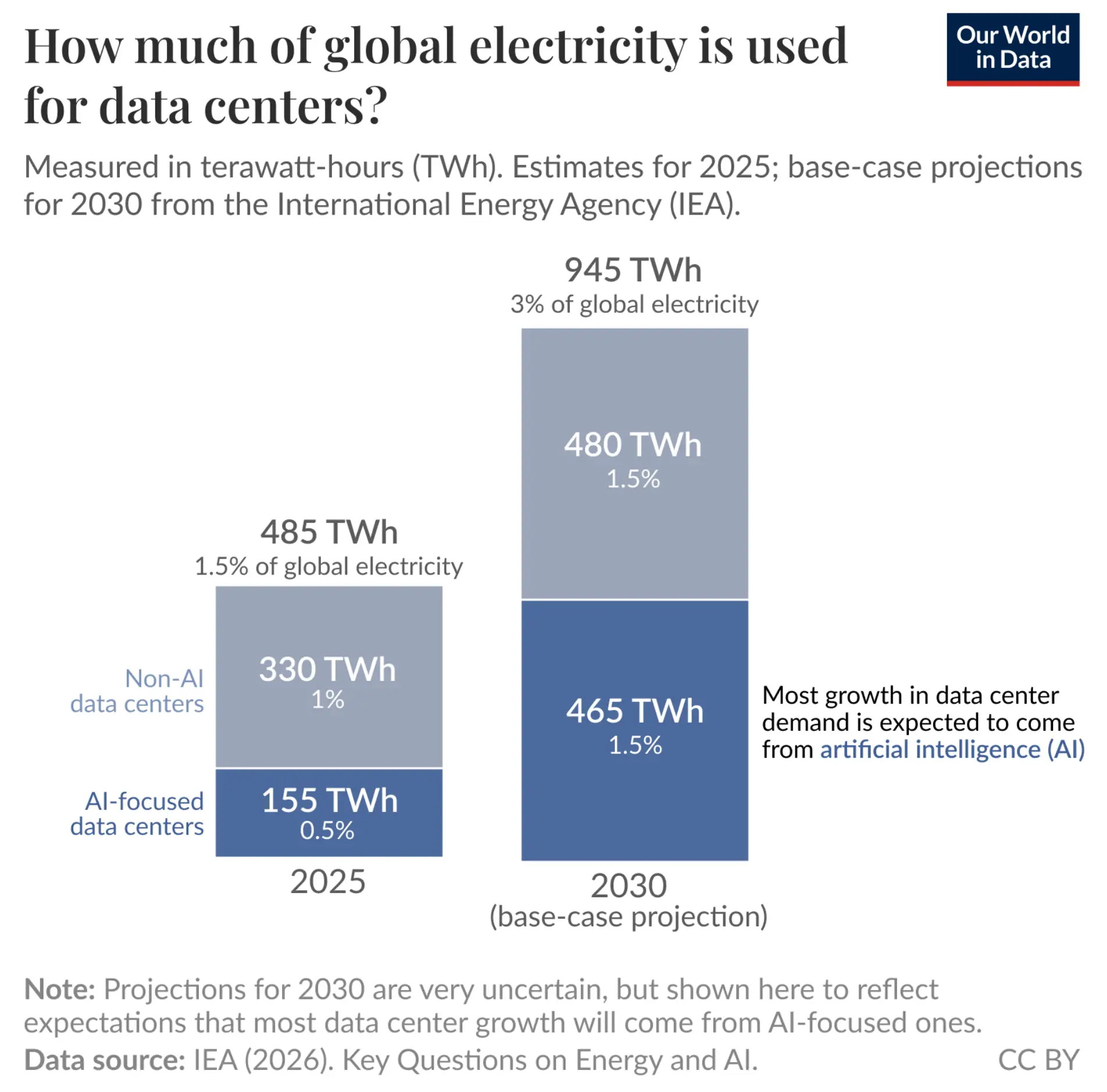
According to the IEA, electricity consumption by global data centers rose 17% in 2025.
Growth was even stronger for data centers focused specifically on AI.
Under the agency’s base-case scenario, total data center electricity consumption is expected to rise from roughly 485 TWh in 2025 to around 950 TWh by 2030.
In the United States, the IEA estimates that data centers could account for roughly half of all growth in electricity demand through 2030.
The AI investment story is therefore expanding into power generation, electricity grids, transformer manufacturers, cooling companies and other industrial sectors.
What began as a purely technological trend is increasingly becoming a question of physical infrastructure as well.
Another Option Is to Invest in Companies Selling AI to Customers
At the opposite end of the value chain is software.
While chipmakers sell the infrastructure required to build AI, software companies are trying to turn artificial intelligence into products that customers are willing to pay for repeatedly.
This includes AI assistants, programming tools, business automation software, data analytics, marketing platforms, image and video generation, and cybersecurity applications.
This part of the market may ultimately determine whether the enormous investment in AI infrastructure can generate an adequate economic return.
For investors, it is therefore not enough to focus only on which company has the best AI model.
Revenue growth, customer acquisition, margins, inference costs and the ability to turn technological advantages into a sustainable business all matter.
Large technology companies have a clear advantage in this respect.
Microsoft can integrate AI into its productivity and cloud software.
Alphabet can bring AI into search, advertising and Google Cloud.
Meta can use it across its social networks, while Amazon can integrate it into both cloud computing and e-commerce.
Investing in these companies, however, is not a pure bet on AI.
Their financial performance is influenced by many other business segments as well.
Can You Invest Directly in OpenAI or Anthropic?
Not all of the best-known AI companies are publicly traded.
As of September 2026, neither OpenAI nor Anthropic is listed on a public stock exchange.
Ordinary investors therefore cannot simply buy their shares through a standard brokerage account.
Private shares may occasionally be available to institutional or accredited investors through secondary-market transactions.
These investments, however, tend to involve much lower liquidity, high minimum investment requirements and additional risks.
For most retail investors, exposure to the growth of generative AI therefore remains indirect.
One option is to invest in publicly traded companies that work with leading AI labs, provide them with infrastructure or otherwise benefit from their expansion.
AI ETFs Can Spread Risk Across Multiple Companies
Exchange-traded funds offer an alternative to selecting individual stocks.
There are thematic ETFs focused on artificial intelligence, robotics, semiconductors, cloud computing and the broader technology sector.
Their main advantage is diversification.
Instead of betting on a single company, investors gain exposure to a basket of businesses at the same time.
If one chipmaker or software company loses its competitive position, the impact on the overall portfolio may be smaller.
However, thematic ETFs need to be examined carefully.
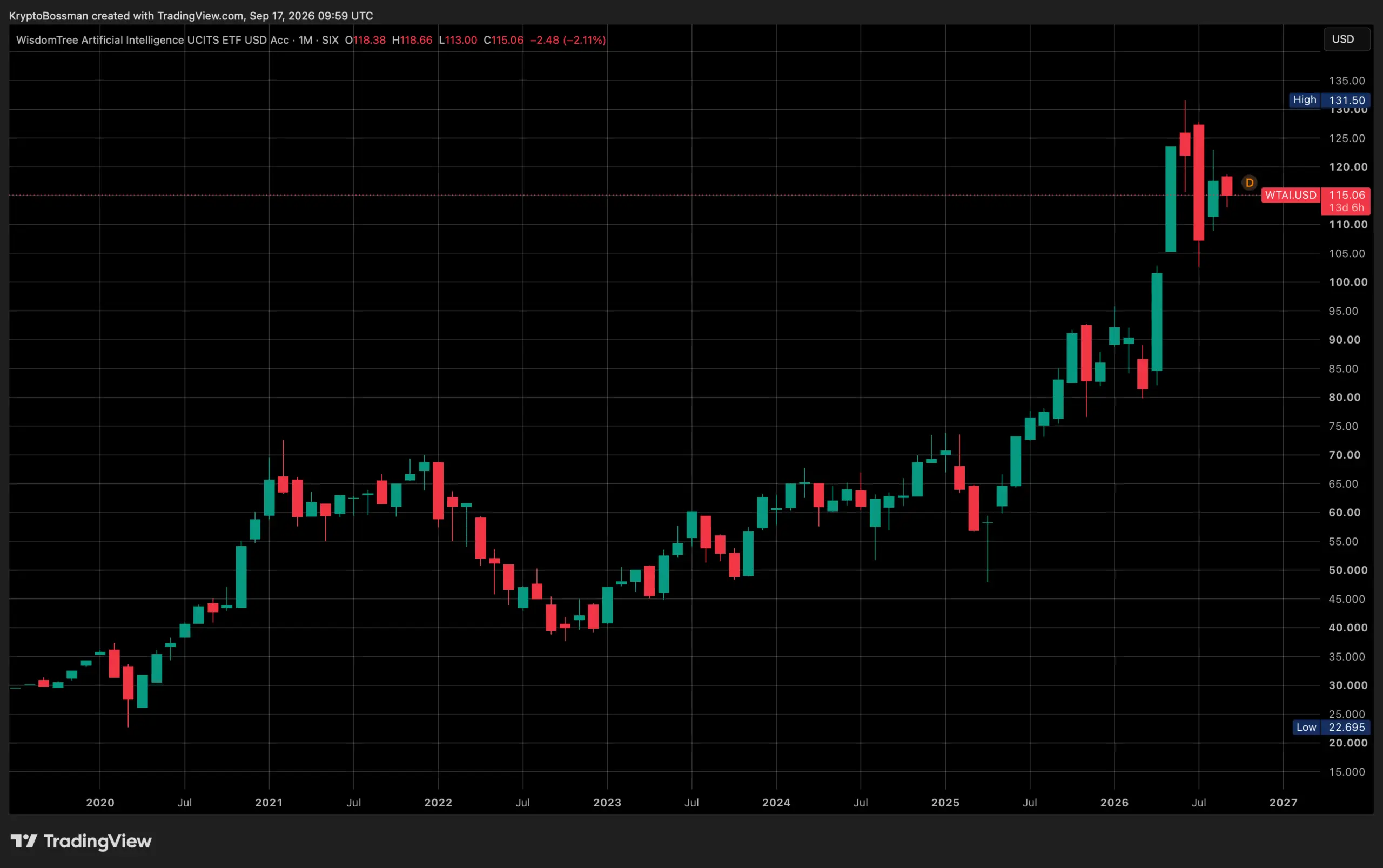
Simply having the term “AI” in the name of a fund does not necessarily mean that investors are getting pure exposure to artificial intelligence.
Some funds hold dozens of companies for which AI represents only a small part of their business.
Others may be heavily concentrated in a handful of large technology stocks.
When evaluating an ETF, investors should therefore look at its largest holdings, index methodology, fees, number of companies, geographic exposure and portfolio concentration.
For long-term investors, it may also be useful to compare a thematic AI ETF with a conventional technology ETF or a broad stock market index.
Many of the world’s largest technology companies already represent a significant share of those broader indices.
How to Evaluate AI Stocks
Strong growth in an industry does not automatically make every stock associated with that trend an attractive investment.
A share price reflects not only a company’s current financial performance, but also investor expectations about the future.
A company might double its profits over several years and still deliver a disappointing investment return if the market had already expected even faster growth.
When analyzing AI-related stocks, investors may therefore want to focus on:
- revenue and profit growth, margins and free cash flow,
- the share of revenue that is genuinely related to AI,
- capital expenditure required to maintain future growth,
- competitive advantages and dependence on a small number of major customers,
- valuation relative to expected growth and the risks associated with the company’s position in the AI value chain.
Different metrics matter for different businesses.
For a semiconductor company, manufacturing capacity, technological leadership and margins may be crucial.
For a cloud provider, data center utilization and returns on massive capital investments matter more.
For a software company, customer growth, recurring revenue and the cost of operating AI models may be especially important.
The Biggest Risks of Investing in AI
Artificial intelligence can be a long-term technological revolution and still be a poor investment if bought at the wrong price.
Financial history contains many examples of new technologies that genuinely transformed the world while a large number of investors still lost money.
One of the best-known examples is the dot-com bubble around the turn of the millennium.
The internet did not disappear.
On the contrary, it transformed almost every part of the economy.
But many technology companies went bankrupt, while the share prices of some surviving businesses took years to recover to their previous highs.
A similar risk exists with AI.
Investors may become too optimistic about future growth.
Competition could push down the price of AI services.
New chip architectures could weaken the position of today’s market leaders.
Companies may invest hundreds of billions of dollars in infrastructure without generating an adequate return on that investment.
Other risks include regulation, geopolitics, energy shortages, supply-chain constraints and rapid technological change.
The IEA has already warned that new data center construction is being limited in some areas by problems with grid connections and shortages of transformers, turbines, chips and other components.
So, How Can You Invest in Artificial Intelligence?
There is no single way to gain investment exposure to AI.
Investors can focus on semiconductor companies supplying the computing power behind modern models.
They can look at cloud and data center operators, companies providing energy infrastructure, or businesses using AI to create specific products and services.
Another option is to use ETFs that spread capital across a broader group of companies.
Before investing, however, it is important to separate two different questions:
Will artificial intelligence become an important technology? And is a particular investment attractive at its current price?
An investor may answer the first question with a clear yes while still concluding that some AI-related stocks are too expensive.
That distinction is fundamental.
Following a technological trend and making a successful investment are not the same thing.
Artificial intelligence is already creating an enormous new investment ecosystem.
It includes not only the companies behind the most famous chatbots, but also chip designers, semiconductor manufacturers, cloud providers, data centers, electricity grids and dozens of other industries.
For investors, understanding the entire AI value chain may therefore be more important than trying to identify a single company that will emerge as the winner of the AI revolution.
This article is for informational and educational purposes only and does not constitute investment advice.
